






What's Happening?
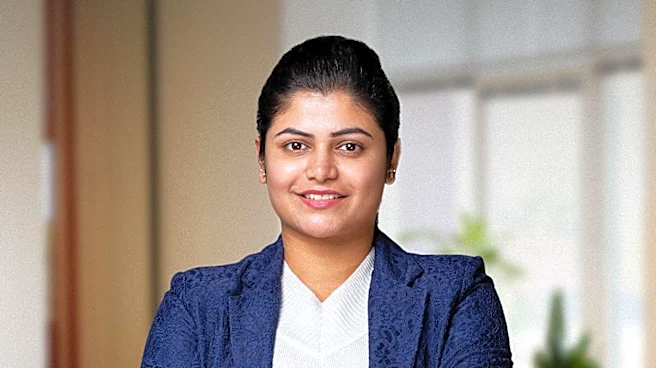
Univ.-Prof. Priyadharshini Perumal has been appointed as the new Head of the Chair of Ceramics at the Technical University of Leoben. Her research focuses on integrating materials research, circular economy principles, and civil engineering to develop
more sustainable building materials. Perumal aims to utilize industrial residual materials as valuable resources for construction, thereby reducing the demand for natural resources and minimizing waste. Her work emphasizes Circular Engineering, where materials are kept in use for as long as possible, and residual materials are re-purposed. This approach seeks to address the high demand for natural resources in building materials like wood, natural stone, and cement, particularly concrete, which is one of the most widely used materials globally and requires significant raw materials and energy for its production. Perumal's research will explore how by-products from mining, the steel industry, and construction and demolition can be transformed into raw materials for new, high-performance building materials, rather than being sent to landfills.
Why It's Important?
This appointment and research focus are significant for the U.S. and global construction industries, which are major consumers of natural resources and producers of waste. The development of sustainable building materials from industrial residual products offers a pathway to reduce environmental impact, conserve resources, and potentially lower production costs. For the U.S., adopting such innovations could lead to more sustainable infrastructure development, decreased reliance on virgin materials, and a reduction in landfill waste. Industries that generate significant by-products, such as mining and steel production, stand to gain by finding new economic value in their waste streams. Conversely, traditional material suppliers might face pressure to adapt to more sustainable practices. The emphasis on Circular Engineering could also influence U.S. policy towards waste management and resource efficiency, promoting a more circular economy in the construction sector. This shift could create new markets for recycled materials and green building technologies, fostering innovation and job creation in sustainable practices.
What's Next?
Professor Perumal plans to establish new research structures at TU Leoben and expand research into innovative and sustainable building materials. Her work will involve exploring methods to process by-products from various industries, including mining and steel, for construction applications. The goal is to develop high-performance building materials that meet both ecological and technical requirements. She also aims to inspire young women to pursue careers in research and civil engineering. The outcomes of her research could lead to new material standards and construction practices that prioritize sustainability. Potential next steps include pilot projects demonstrating the viability of these new materials, collaborations with industrial partners to scale up production, and the dissemination of research findings to influence international building codes and practices. The long-term vision is to integrate these sustainable materials into mainstream construction, reducing the environmental footprint of the built environment.
Beyond the Headlines
The deeper implications of Professor Perumal's work extend beyond material science to broader societal and ethical considerations. Her research challenges the traditional linear economic model of 'take, make, dispose' by advocating for a circular approach where waste is viewed as a resource. This paradigm shift has the potential to fundamentally alter how industries perceive and manage their by-products, fostering a more responsible and resource-efficient global economy. Ethically, it addresses the imperative to reduce human impact on the environment and ensure resource availability for future generations. Culturally, it could promote a greater appreciation for sustainability and innovation in engineering and construction. The focus on utilizing industrial residual materials also highlights the interconnectedness of various industries and the potential for cross-sector collaboration to solve complex environmental challenges. This approach could also lead to the development of new educational curricula and training programs focused on circular economy principles and sustainable engineering.