
What's Happening?
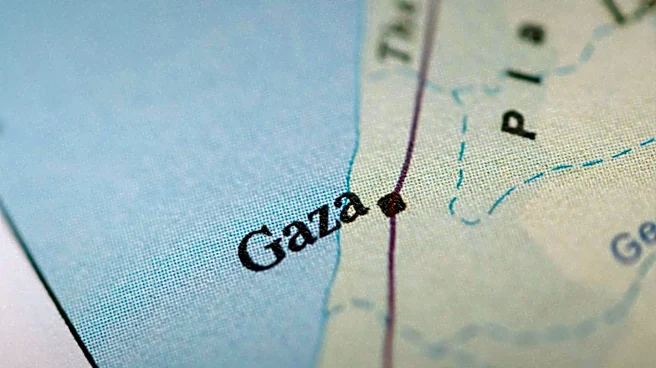
The Integrated Food Security Phase Classification (IPC) has reported that the famine declared in parts of Gaza last year has ended, but food insecurity remains at crisis levels. The IPC noted that while
acute food insecurity has improved due to a reduction in fighting and increased aid from Israel, over 200,000 residents still experience emergency conditions. Despite these improvements, the United Nations warned that the situation remains fragile and could deteriorate again. The IPC's recent assessment downgraded Gaza's classification from famine to crisis, indicating that while acute malnutrition has declined to acceptable levels, the overall food security situation is still precarious.
Why It's Important?
The improvement in Gaza's food security is significant as it highlights the impact of international aid and reduced conflict on humanitarian conditions. However, the ongoing crisis underscores the fragility of the situation and the potential for rapid deterioration if humanitarian access is disrupted. This situation affects over 2.1 million Palestinians, with many still lacking sufficient food. The report serves as a reminder of the complex interplay between conflict, humanitarian aid, and food security, emphasizing the need for sustained international support and political solutions to prevent further crises.
What's Next?
The IPC warns that any disruption in humanitarian aid could quickly reverse the gains made in food security. The international community, including Israel, must continue to facilitate aid access to prevent a return to famine conditions. Additionally, political efforts to stabilize the region and address the underlying causes of the conflict are crucial to ensuring long-term food security and stability in Gaza.