







What's Happening?
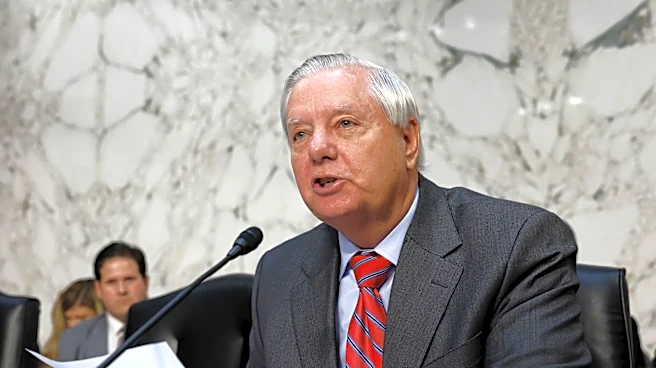
Senator Lindsey Graham of South Carolina, a prominent Republican and close ally of President Trump, passed away on Saturday night at the age of 71 due to a brief and sudden illness. Graham, who was a key figure in U.S. foreign policy and a staunch supporter
of President Trump, had recently returned from a visit to Ukraine. His death leaves a significant vacancy in the Senate, as he was the chairman of the Senate Budget Committee and had secured the Republican nomination for the upcoming election. The South Carolina native had a long career in politics, first elected to the Senate in 2002, and was known for his strong advocacy for U.S. military and foreign policy.
Why It's Important?
Graham's death has significant implications for the U.S. Senate and the Republican Party. As a senior member of the Senate and a key ally of President Trump, his absence could impact the Republican majority's ability to pass legislation and confirm judicial appointments. His death also triggers a political process in South Carolina to fill his Senate seat, which could influence the balance of power in the Senate. Additionally, Graham's role in foreign policy and his support for military initiatives means his passing could affect ongoing U.S. foreign relations and defense strategies.
What's Next?
Following Graham's death, South Carolina Governor Henry McMaster is expected to appoint a temporary replacement to fill the Senate seat until a special election can be held. The special primary election to select the next Republican nominee is scheduled for August 11, with a potential runoff on August 25. This process will determine who will carry the Republican banner in the upcoming general election. The outcome of this election could have significant implications for the Republican Party's control of the Senate.