


What's Happening?
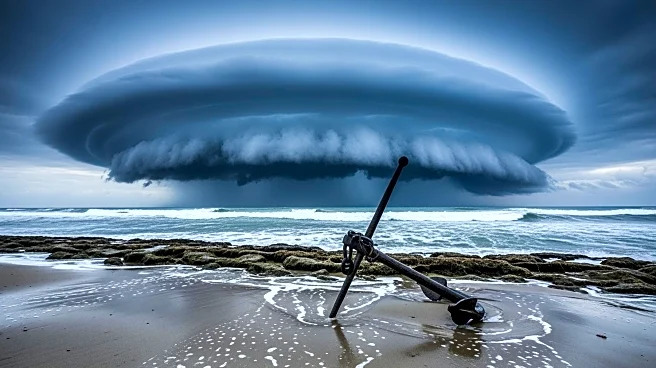
A severe storm in the North Atlantic, characterized by rapidly intensifying conditions, is causing significant disruptions to shipping routes. The storm, with a central pressure of just 938 millibars, is located south of Greenland and is producing winds
up to 80 knots and sea waves reaching 54 feet. This has led to most transatlantic shipping diverting southwards to avoid the worst conditions. Only a few ships, such as the 60,000 dwt bulker Nord Allegro, remain in the affected area, moving slowly to escape the storm. The storm's rapid intensification classifies it as a 'bomb cyclone,' a term used when a cyclone's pressure drops more than 24 hPa within 24 hours. This storm is among the most intense observed in the North Atlantic this season. The severe weather has already caused several maritime incidents, including the grounding of a French trawler near Ireland and a guard boat in Wales, both of which required rescue operations.
Why It's Important?
The storm's impact on shipping routes highlights the vulnerability of maritime logistics to extreme weather events. The diversion of shipping routes can lead to delays in the delivery of goods, affecting supply chains and potentially increasing costs for businesses reliant on timely shipments. The grounding incidents also underscore the risks to maritime safety and the potential for environmental damage, such as oil spills, which can have long-term ecological consequences. The storm's classification as a bomb cyclone points to the increasing frequency and intensity of such weather events, possibly linked to broader climate change patterns. This raises concerns for future maritime operations and the need for improved forecasting and preparedness to mitigate risks.
What's Next?
Efforts are underway to manage the immediate consequences of the storm, including salvage operations for grounded vessels and pollution prevention measures. The shipping industry may need to reassess route planning and emergency response strategies to better handle similar future events. Additionally, there may be calls for enhanced international cooperation in weather monitoring and maritime safety protocols to protect both human lives and the environment. The economic impact of the storm could prompt discussions on insurance and liability issues related to extreme weather disruptions.