






What's Happening?
California voters are facing a ballot with 14 propositions, the highest number since the November 2016 election, leading to widespread displeasure. A recent PPIC Statewide Survey, presented by survey analyst Deja Thomas, reveals that likely voters find
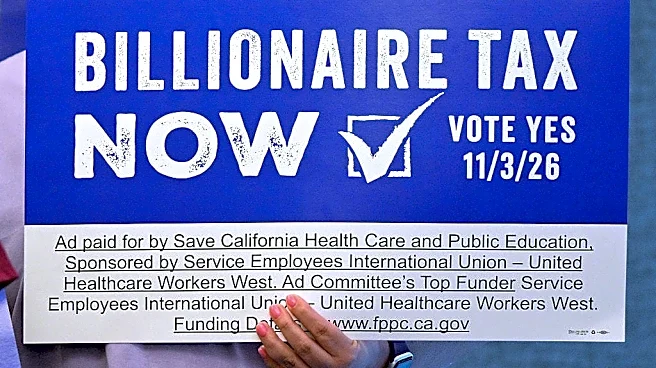
ballots excessively long and the wording of citizens' initiatives too complicated, making it difficult to understand their implications. Among the propositions, Proposition 40, which proposes a one-time 5% tax on taxpayers with assets over $1 billion, has thin support with 52% voting yes and 46% no. Proposition 3, aiming to make an existing tax on higher incomes permanent, garners more support at 58% yes. Measures to nullify Proposition 40, specifically Proposition 41 (requiring state auditor approval for new special taxes) and Proposition 42 (restricting new taxes on personal property), also show slim support at 51% and 54% yes, respectively. In the gubernatorial race, Xavier Becerra leads Steve Hilton, with 6 in 10 likely voters supporting Becerra.
Why It's Important?
The dissatisfaction among California voters regarding long and complex ballots has significant implications for democratic engagement and policy outcomes. When voters find initiatives confusing, it can lead to uninformed decisions or lower participation rates, undermining the democratic process. The split opinions on tax-related propositions, such as Proposition 40 and Proposition 3, highlight ongoing debates about wealth distribution and state revenue, which could impact California's economic policies and social programs. The potential passage of measures like Proposition 41 and 42, which could nullify other tax initiatives, indicates a complex interplay of voter preferences and a desire for checks and balances on state taxation. Furthermore, the strong lead of Xavier Becerra in the gubernatorial race suggests a potential continuation of current political trends in the state, influencing future legislative priorities and the overall direction of California's governance. This voter sentiment also reflects broader concerns about government transparency and the accessibility of political information.
What's Next?
As the midterm elections approach, the focus will be on how voter frustration with ballot complexity translates into actual voting behavior. Election officials and advocacy groups may face increased pressure to simplify ballot language and provide clearer explanations for propositions. The outcomes of the various propositions, particularly those related to taxation, will directly impact California's fiscal policies and potentially set precedents for future legislative efforts. The gubernatorial race will culminate in a decision that will shape the state's executive leadership and policy agenda for the coming term. Political parties and candidates will continue to campaign vigorously, attempting to sway undecided voters and mobilize their bases. The results of these elections will not only determine the immediate future of California's governance but also offer insights into voter priorities and the effectiveness of direct democracy in a large, diverse state.
Beyond the Headlines
The issue of overly long and complex ballots in California points to a deeper challenge within direct democracy: the balance between citizen participation and informed decision-making. While ballot initiatives are designed to give power to the people, their increasing complexity can inadvertently disenfranchise voters who lack the time or resources to thoroughly understand each measure. This situation raises ethical questions about the responsibility of legislative bodies to present clear and concise information to the electorate. Culturally, it reflects a growing demand for transparency and accountability from government, as voters express a desire for more accessible political processes. Long-term, if this trend continues, it could lead to calls for reforms in how ballot initiatives are drafted and presented, potentially influencing the structure of direct democracy in other states. The current voter sentiment in California underscores the need for continuous evaluation of democratic mechanisms to ensure they remain effective and equitable.