
What's Happening?
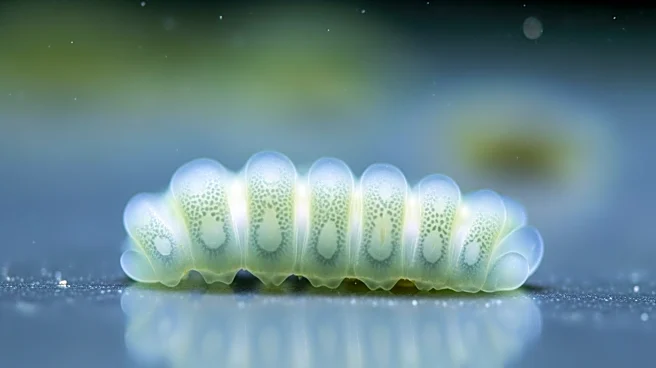
Researchers have discovered that tissue from a sea cucumber can survive and grow for over three years in natural seawater, challenging previous assumptions about tissue immortality. This study, led by
scientists at Memorial University of Newfoundland and published in Science Advances, documented the long-term viability of amputated sea cucumber tissue outside of a controlled environment. The findings suggest that this tissue can heal and grow in a complex, microbially diverse environment, absorbing nutrients directly from seawater. This discovery opens new possibilities for biomedical research, offering a model for tissue regrowth and antimicrobial healing without the ethical and logistical challenges associated with human or vertebrate cell lines.
Why It's Important?
The ability of sea cucumber tissue to survive and grow in natural conditions could have significant implications for biomedical sciences. This discovery provides a new model for studying tissue regeneration and resilience, potentially leading to advancements in medical treatments and tissue engineering. The research highlights the untapped potential of marine life in contributing to scientific knowledge and innovation. By offering a more accessible and less restricted model for biological research, this finding could facilitate breakthroughs in understanding tissue regrowth and developing new medical applications.
What's Next?
Future research may focus on understanding the mechanisms behind the sea cucumber tissue's resilience and growth. Scientists could explore potential applications in regenerative medicine and tissue engineering, aiming to replicate these processes in human tissues. The study also underscores the importance of preserving marine environments, as they may hold valuable biological insights. Continued exploration of ocean life could lead to further discoveries that enhance our understanding of biological resilience and inform new medical technologies.
Beyond the Headlines
This discovery raises questions about the ethical and legal implications of using marine organisms in research. As the study of sea cucumber tissue progresses, researchers must consider the environmental impact of harvesting marine life for scientific purposes. Additionally, the potential for commercial applications of this research could lead to debates over intellectual property rights and the sharing of benefits derived from marine resources. The study also highlights the need for interdisciplinary collaboration between marine biologists, medical researchers, and policymakers to ensure sustainable and ethical use of ocean resources.