










What's Happening?
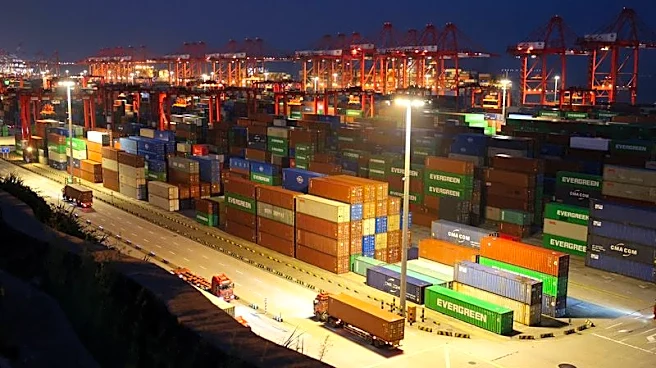
Shanghai has ascended to the position of the world's second-most prominent shipping hub, according to the 2026 Xinhua-Baltic International Shipping Centre Development Index (ISCDI) Report. This annual report, a collaboration between the Baltic Exchange
and Xinhua News Agency, evaluates global shipping centres based on port factors, professional business services, and the general environment. Singapore retained its top spot for the thirteenth consecutive year, highlighting its strategic location and comprehensive maritime services. Shanghai's rise from seventh place in 2014 to second in 2026 underscores its growing influence in global maritime trade. Other Chinese ports, such as Ningbo-Zhoushan, Guangzhou, Qingdao, and Tianjin, also improved their rankings, indicating China's expanding maritime capabilities.
Why It's Important?
Shanghai's advancement in the global shipping hub rankings signifies China's increasing role in international maritime trade. This development reflects China's strategic investments in port infrastructure and maritime services, enhancing its connectivity and service capabilities. The rise of Chinese ports in the rankings highlights the country's commitment to becoming a dominant player in global trade. This shift could impact global shipping dynamics, with potential implications for trade routes, shipping costs, and international maritime policies. As China strengthens its maritime presence, other global shipping centres may face increased competition, prompting them to innovate and enhance their services to maintain their positions.
What's Next?
The continued rise of Chinese shipping centres suggests a potential reshaping of global maritime trade routes and alliances. As China invests in green transition and digital innovation, other countries may need to adapt to these changes to remain competitive. The evolving landscape could lead to new partnerships and collaborations within the maritime industry, focusing on sustainability and technological advancements. Stakeholders, including shipping companies and port authorities, will likely monitor these developments closely to align their strategies with the shifting dynamics of global trade.
Beyond the Headlines
The rise of Shanghai and other Chinese ports in the global rankings may have broader geopolitical implications. As China strengthens its maritime capabilities, it could leverage this position to influence international trade policies and negotiations. The focus on green transition and digital innovation aligns with global efforts to address climate change and enhance supply chain efficiency. This shift may encourage other countries to prioritize sustainable practices and technological advancements in their maritime strategies, potentially leading to a more environmentally conscious and interconnected global shipping industry.