



What's Happening?
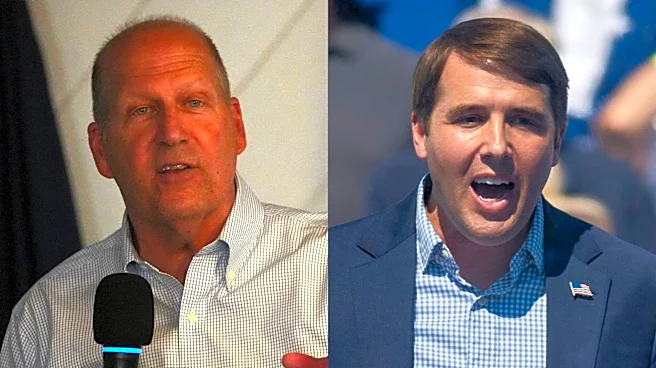
Representative Suhas Subramanyam (D-Va.) announced on Thursday that the Department of Justice informed him his phone calls with a Virginia state legislator were wiretapped in the spring. Subramanyam stated that the wiretap was part of an investigation
targeting Senate President Louise Lucas. He expressed suspicion regarding the timing of the wiretap, noting it occurred during campaigning for a nullified redistricting referendum. The revelation raises concerns about the scope and justification of federal investigations involving elected officials and the potential implications for political processes. The Department of Justice has not yet released further details regarding the investigation or the specific reasons for wiretapping a U.S. Representative's communications.
Why It's Important?
The wiretapping of a U.S. Representative's phone calls, even if incidental to an investigation of another official, carries significant implications for legislative privilege and the separation of powers. It raises questions about the extent to which federal law enforcement can monitor communications involving members of Congress and state legislators, potentially impacting their ability to conduct official duties and engage in political discourse without undue scrutiny. The timing of the wiretap, as highlighted by Representative Subramanyam, during a politically sensitive period like a redistricting referendum campaign, could fuel concerns about potential political motivations or interference in democratic processes. This incident could lead to calls for greater transparency regarding federal investigative practices and the safeguards in place to protect the communications of elected officials.
What's Next?
The disclosure of the wiretap is likely to prompt further scrutiny and potentially calls for an official inquiry into the circumstances surrounding the investigation. Representative Subramanyam may seek more information from the Department of Justice regarding the specifics of the wiretap, its duration, and the justification for including his communications. Other members of Congress and civil liberties advocates may also voice concerns, potentially leading to legislative proposals aimed at strengthening protections for elected officials against surveillance. The investigation into Senate President Louise Lucas will continue, and the wiretapped conversations could become relevant to that probe. The incident may also influence public perception of federal law enforcement's powers and its interactions with state and federal legislative bodies.
Beyond the Headlines
This event delves into the delicate balance between national security, law enforcement, and the protection of civil liberties, particularly for those in public office. The use of wiretaps on elected officials, even indirectly, can have a chilling effect on political communication and the free exchange of ideas necessary for democratic governance. It raises fundamental questions about privacy in the digital age and the potential for surveillance technologies to be used in ways that could be perceived as politically motivated. The incident could also spark a broader debate about the oversight of federal agencies like the Department of Justice and the FBI, and the need for clear guidelines and accountability mechanisms when investigating public figures. The long-term impact could be a re-evaluation of existing laws and policies governing surveillance and the rights of elected officials.