



What's Happening?
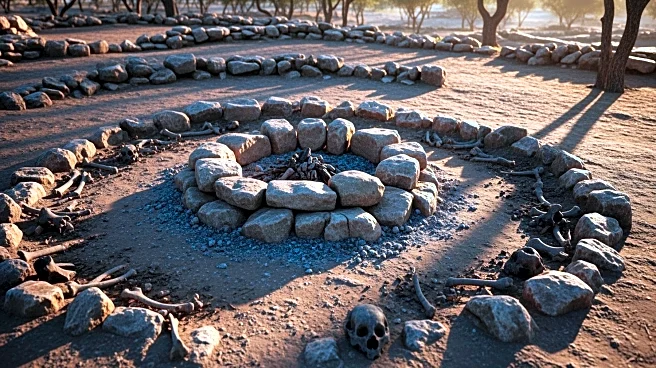
A recent study has uncovered the oldest known cremation pyre in Africa, dating back approximately 9,500 years, at the base of Mount Hora in northern Malawi. This discovery, detailed in the journal Science Advances, reveals that a community of hunter-gatherers
cremated a small woman on an open pyre, marking the earliest evidence of intentional cremation on the continent. The research, conducted by an international team, utilized archaeological, geospatial, forensic, and bioarchaeological methods to reconstruct the cremation process. The findings suggest that the mortuary practices of ancient African foragers were more complex than previously understood, involving significant communal effort to build and maintain the pyre. The study also highlights the rarity of cremation among ancient hunter-gatherers due to the labor-intensive nature of the process.
Why It's Important?
This discovery is significant as it challenges previous assumptions about the social and ritual behaviors of ancient African hunter-gatherers. The complexity of the cremation process indicates a level of social organization and ritualistic behavior that was not previously attributed to these communities. The findings suggest that these early humans engaged in elaborate mortuary rituals, which may have included posthumous manipulation of remains for social memory and ancestral veneration. This new understanding of ancient African societies provides valuable insights into the evolution of human cultural practices and the development of complex social structures.
What's Next?
Further research is needed to understand the motivations behind this unique cremation event, as it stands out from other burials at the site. The team plans to continue exploring the site to uncover more about the social and cultural dynamics of these ancient communities. Additionally, the study opens up new avenues for investigating the role of ritual and memory in early human societies, potentially leading to a reevaluation of similar sites across Africa and beyond.
Beyond the Headlines
The discovery raises questions about the role of ritual in shaping early human societies and the ways in which these practices influenced social cohesion and identity. The communal effort required for the cremation suggests a shared cultural or spiritual belief system that may have played a crucial role in the community's social structure. This finding also contributes to the broader understanding of human evolution, particularly in terms of the development of complex cultural practices and their impact on social organization.