




What's Happening?
Commercial Remote ID receivers are being increasingly utilized to enhance airspace security by detecting drones and identifying their pilots. These receivers use passive radio frequency technology to provide real-time alerts and actionable intelligence,
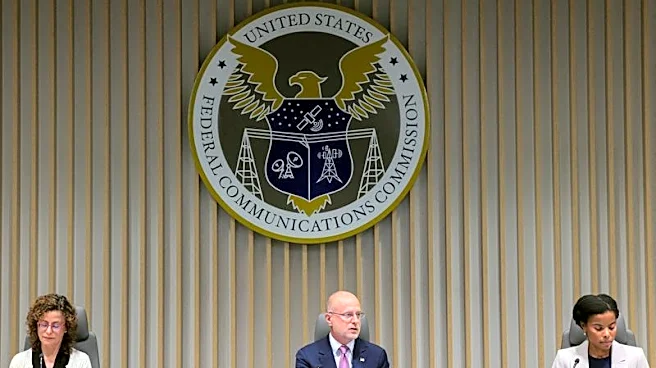
crucial for protecting critical infrastructure, correctional facilities, and mass gathering venues. Unlike mobile apps, commercial receivers offer long-range detection capabilities, essential for early warning and intervention. The technology is compliant with Federal Communications Commission standards and is being integrated into broader security frameworks to address evolving aerial threats.
Why It's Important?
The deployment of commercial Remote ID receivers is vital for maintaining airspace security in various sectors. As drones become more prevalent, the risk of unauthorized surveillance, contraband delivery, and event disruption increases. These receivers provide a critical layer of security by enabling rapid response to potential threats, thereby safeguarding public safety and infrastructure integrity. The technology's ability to pinpoint pilot locations allows for effective law enforcement intervention, making it an indispensable tool for security teams. This development reflects a broader trend towards integrating advanced technology in security operations to address modern challenges.
What's Next?
As the demand for airspace security solutions grows, the adoption of commercial Remote ID receivers is expected to expand across more sectors. Future developments may include enhanced integration with other detection systems, such as radar, to provide comprehensive coverage. Regulatory frameworks, such as the FAA's proposed Part 74 rule, may further drive the adoption of this technology by establishing no-fly zones and requiring active remote ID capabilities. The continued evolution of drone technology and its applications will likely necessitate ongoing advancements in detection and security measures.