


What's Happening?
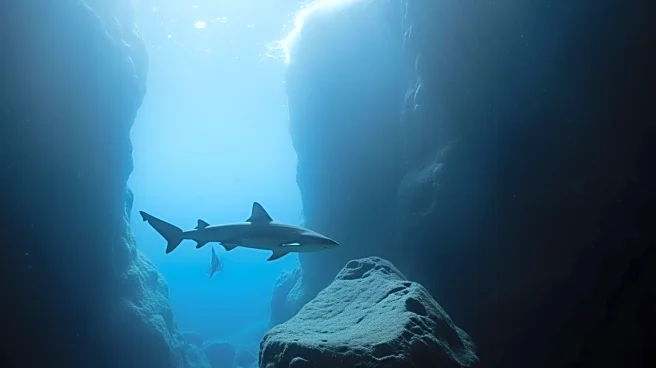
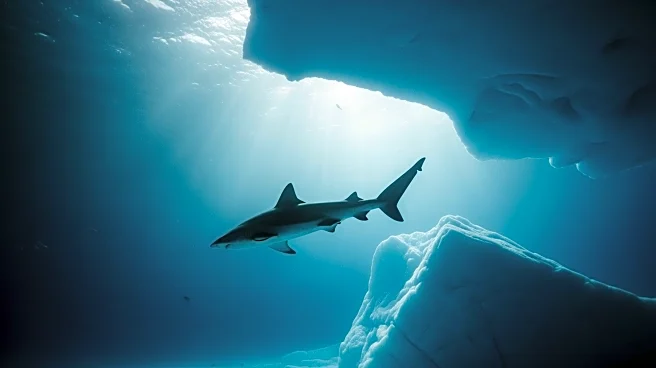
A sleeper shark has been filmed for the first time in the deep waters of the Antarctic Ocean, challenging previous assumptions about shark habitats. The footage was captured by the Minderoo-UWA Deep-Sea Research Centre at a depth of over 1,500 feet, where
water temperatures are near freezing. This discovery was unexpected, as it was believed that sharks could not survive in such frigid conditions. The shark, estimated to be between 10 and 13 feet long, was recorded near the South Shetland Islands. The presence of this shark in Antarctic waters suggests that these creatures may have adapted to colder environments, potentially due to climate change.
Why It's Important?
The discovery of a sleeper shark in Antarctic waters is significant for marine biology and climate science. It challenges existing knowledge about the distribution of shark species and their ability to adapt to extreme environments. This finding could indicate broader ecological changes in the Southern Ocean, possibly linked to climate change and warming ocean temperatures. Understanding the presence and behavior of sharks in these waters can provide insights into the health of marine ecosystems and the impacts of environmental shifts. This discovery may lead to further research on the adaptability of marine species to changing climates, influencing conservation strategies and policies.
What's Next?
Researchers will likely conduct further studies to understand the implications of this discovery. There may be increased efforts to monitor shark populations in the Antarctic and assess their ecological roles. This could involve deploying more research equipment to gather data on marine life in these remote areas. The findings may also prompt discussions on the effects of climate change on marine biodiversity and the need for international cooperation in ocean conservation. As scientists continue to explore these depths, they may uncover more surprises that could reshape our understanding of marine life and its resilience to environmental changes.