

What's Happening?
Democratic candidates for various offices in Arkansas, including Senator Fred Love (Gubernatorial race), James “Rus” Russell (4th Congressional District), and Hallie Shoffner (U.S. Senate race), attended the 50th Annual Hope Watermelon Festival. The festival,
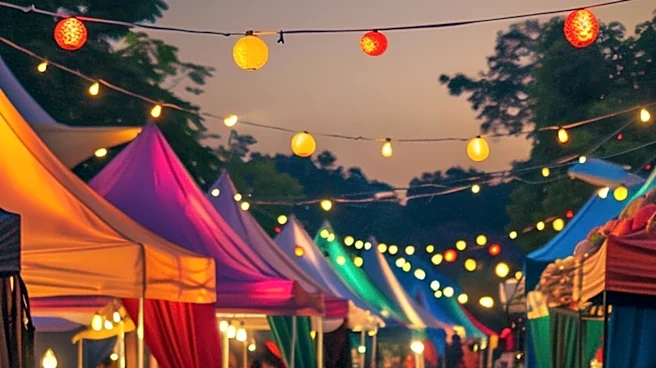
held from August 6th to August 8th, 2026, provided an informal setting for these candidates to interact with the community. Senator Love and Russell participated in a watermelon-eating contest, while Shoffner engaged with festival-goers through games and conversations. Young Democrats of Arkansas President Billy Cook and Vice President Alliah Rowe were also present, connecting with residents. This event allowed candidates to campaign directly to voters in a relaxed environment, distinct from traditional political rallies. The festival itself featured a ribbon-cutting, various activities, competitions, and a concert, celebrating Hope's connection to watermelon and its community traditions.
Why It's Important?
The engagement of Democratic candidates at the Hope Watermelon Festival is important as it signifies a strategic approach to grassroots campaigning in Arkansas. By participating in a community event rather than a formal rally, candidates aim to foster a more personal connection with potential voters, which can be crucial in state and congressional elections. This method allows candidates like Russell, who emphasizes government accountability and economic fairness, to directly address the concerns of small-business owners and healthcare professionals in Central Arkansas. Similarly, Senator Love's focus on education, economic opportunity, and public safety, and Shoffner's platform on lowering costs for families and supporting rural communities, resonate more effectively when presented in a relatable, community-centric setting. This direct interaction can influence voter perception and turnout, particularly in districts where local issues and personal connections hold significant weight. The presence of Young Democrats also highlights efforts to engage younger voters and build future political support.
What's Next?
Following their engagement at the Hope Watermelon Festival, the Democratic candidates, including James “Rus” Russell, Senator Fred Love, and Hallie Shoffner, are expected to continue their campaign trails across Arkansas in preparation for the 2026 elections. Their strategy will likely involve further participation in local community events, town halls, and direct voter outreach to build on the connections made at the festival. Russell will continue to challenge Republican incumbent Congressman Bruce Westerman in the 4th Congressional District, focusing on issues such as government accountability and economic fairness. Senator Love will press his gubernatorial campaign against Republican Governor Sarah Huckabee Sanders, emphasizing education and public safety. Shoffner will continue her U.S. Senate bid against Senator Tom Cotton, advocating for rural communities and affordable healthcare. The informal interactions at the festival may translate into increased voter support and engagement as the election cycle progresses, with candidates aiming to convert these personal connections into votes.
Beyond the Headlines
The participation of political candidates in local cultural events like the Hope Watermelon Festival underscores a broader trend in U.S. politics: the increasing importance of community engagement and 'retail politics.' In an era often dominated by national narratives and digital campaigns, direct interaction at local festivals allows candidates to bypass traditional media filters and connect with voters on a more personal level. This approach can humanize candidates, making them more relatable and trustworthy to the electorate. For candidates like Russell, who are challenging incumbents, such events offer a vital platform to introduce themselves and their platforms to a wider audience in a non-confrontational setting. It also highlights the enduring role of local traditions and community gatherings as spaces for civic discourse and political participation, demonstrating that even in a highly polarized political landscape, shared cultural experiences can still serve as common ground for engagement.