

What's Happening?
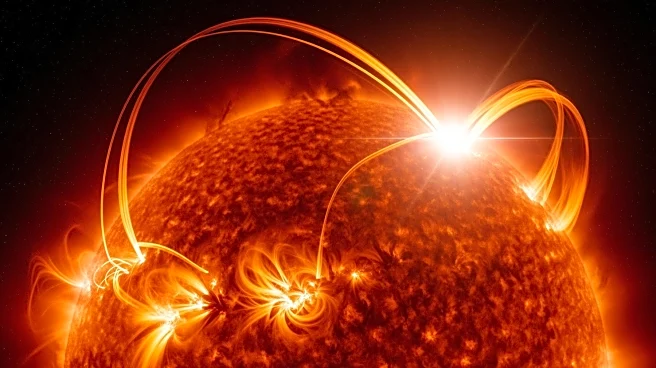
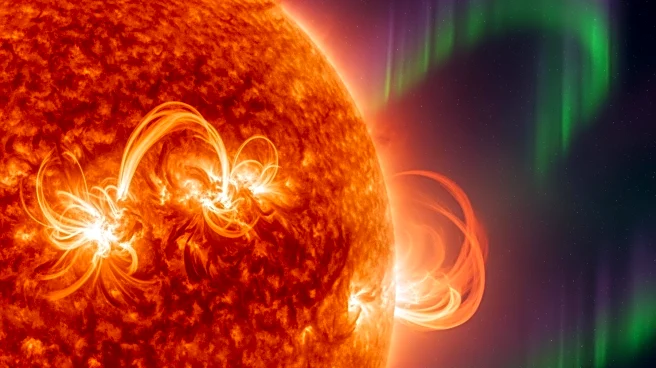
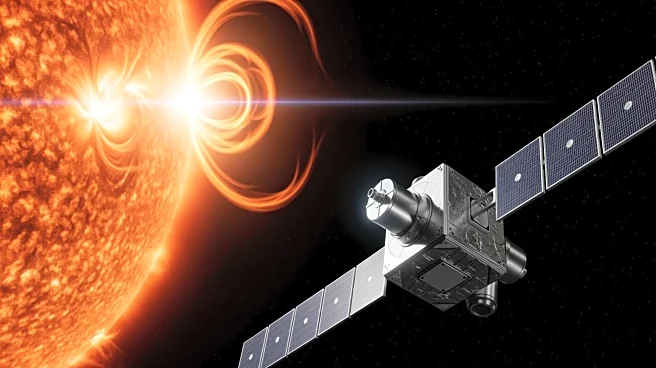
Astronomers have set a new record by continuously observing an active region on the Sun's surface for over three months. This achievement was made possible by the coordinated efforts of two observatories: the European Space Agency's Solar Orbiter and
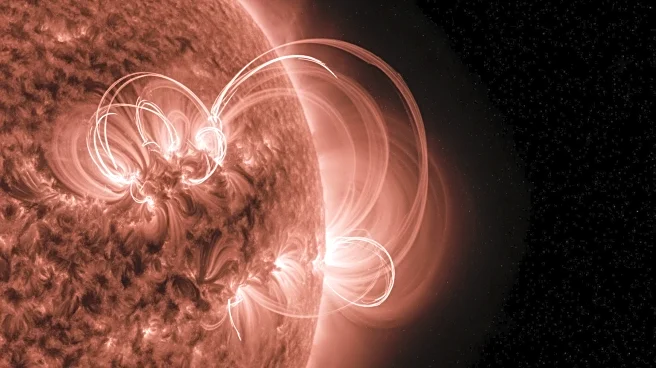
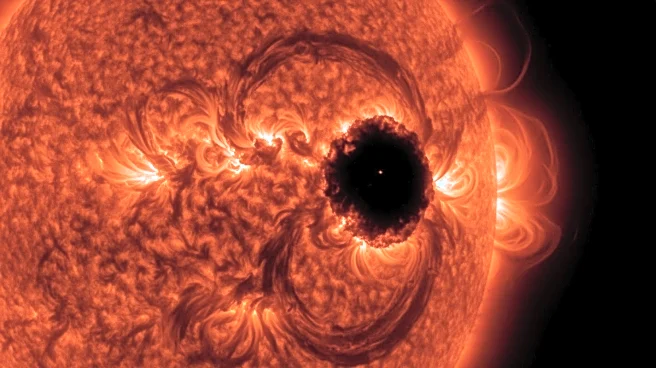
NASA's Solar Dynamics Observatory. The active region, designated NOAA 13664, was tracked from its birth on the far side of the Sun on April 16, 2024, until it rotated out of view on July 18, 2024. This continuous observation is unprecedented, as typically, solar regions are only visible from Earth for about two weeks due to the Sun's 28-day rotation cycle. The ability to monitor this region almost non-stop allowed researchers to study the development of its magnetic fields and their influence on solar activity.
Why It's Important?
The continuous observation of NOAA 13664 is significant for improving predictions of space weather, which can have profound impacts on Earth. Solar storms, driven by changes in the Sun's magnetic fields, can disrupt satellites, electricity grids, and communication systems. By understanding the development and behavior of active solar regions, scientists can better predict when these storms might occur, potentially mitigating their effects on critical infrastructure. This research represents a milestone in solar physics, providing valuable data that could enhance the accuracy of space weather forecasts and help protect technological systems from solar-induced disruptions.
What's Next?
The findings from this record-setting observation are expected to inform future studies and improve models of solar activity. Researchers will likely continue to analyze the data collected to gain deeper insights into the mechanisms driving solar storms. Additionally, the success of this observation may encourage further international collaboration in solar research, utilizing multiple observatories to achieve comprehensive monitoring of the Sun. As technology advances, similar coordinated efforts could become more common, leading to even more detailed understanding of solar phenomena and their impacts on Earth.
Beyond the Headlines
This achievement highlights the importance of international cooperation in scientific research. The collaboration between the European Space Agency and NASA demonstrates how pooling resources and expertise can lead to significant advancements in understanding complex natural phenomena. Furthermore, the ability to continuously monitor solar activity could have long-term implications for space exploration, as understanding solar weather is crucial for the safety of astronauts and spacecraft. This research also underscores the need for continued investment in space science to address the challenges posed by our dynamic solar environment.