





What's Happening?
Representative Jeff Crank (CO-05) has introduced the Supporting Early Childhood Education Opportunities through Upfront Tax Deductions (SPROUT) Act. This proposed legislation aims to incentivize the creation of new childcare and early childhood education
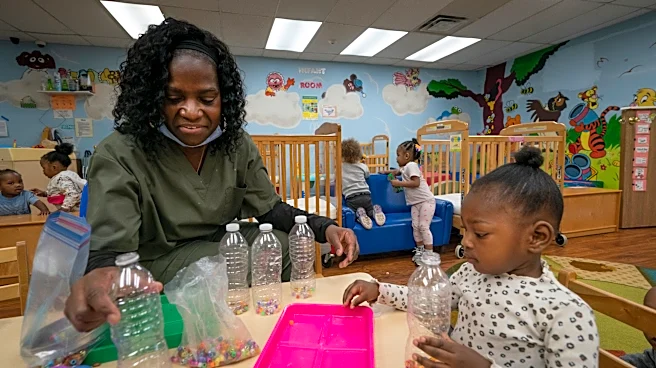
centers by allowing owners of these new facilities to immediately deduct all associated costs in the same tax year they are incurred. Currently, tax regulations require these deductions to be spread over several decades. The SPROUT Act seeks to alleviate the significant shortage of available childcare, particularly for infants and toddlers, which is a challenge faced by Colorado and the entire United States. For instance, El Paso County alone is estimated to have tens of thousands of children lacking access to quality childcare and early education centers. The bill specifies that these tax benefits would apply to centers licensed by a state that provide care for children under the age of five, and requires a written binding contract with a licensed entity before construction or improvements begin to qualify for the deduction.
Why It's Important?
The SPROUT Act addresses a critical national issue: the severe shortage of childcare and early childhood education facilities. This deficit places a substantial burden on families, impacting parents' ability to work and children's access to foundational learning experiences. By accelerating tax deductions for new facilities, the bill aims to stimulate investment in the childcare sector, which could lead to an increase in available slots and potentially more affordable options for families. The current tax framework, which defers deductions over decades, discourages the necessary capital investment for expanding childcare infrastructure. The proposed change could make it more financially attractive for businesses and individuals to establish new centers, thereby expanding access to care and early education, which are crucial for child development and parental workforce participation. The Tax Foundation supports this approach, stating that allowing full and immediate deductions is a proven policy for boosting growth and investment.
What's Next?
The SPROUT Act will now proceed through the legislative process in the U.S. Congress. It will likely be referred to relevant committees for review, debate, and potential amendments. Supporters of the bill will advocate for its passage, emphasizing the economic and social benefits of increased childcare capacity. Opponents, if any, might raise concerns about the fiscal implications of accelerated tax deductions or propose alternative solutions. The bill's progress will depend on bipartisan support and its ability to gain traction amidst other legislative priorities. If passed, the act could lead to a noticeable increase in the construction and establishment of new childcare and early childhood education centers across the country, particularly in areas with high demand and limited options. The effectiveness of the act would then be measured by its impact on childcare availability, affordability, and the overall quality of early learning opportunities.
Beyond the Headlines
Beyond the immediate economic incentives, the SPROUT Act touches upon broader societal implications related to family well-being and gender equality in the workforce. The lack of accessible and affordable childcare disproportionately affects women, often forcing them to reduce work hours or leave the workforce entirely. By expanding childcare options, this legislation could empower more parents, especially mothers, to participate fully in the economy, contributing to household income and career advancement. Furthermore, early childhood education has long-term benefits for children's cognitive and social development, potentially leading to improved educational outcomes and future economic productivity. The bill also highlights the ongoing debate about the role of government in supporting essential social infrastructure, such as childcare, and how tax policy can be leveraged to address market failures and achieve public policy goals. The success of such initiatives could set a precedent for future legislative efforts aimed at strengthening social support systems through economic incentives.