
What's Happening?
A recent study has investigated the healing responses of fetal membranes (FM) following fetoscopic interventions, using a non-targeted proteomic approach combined with histological observations. The research
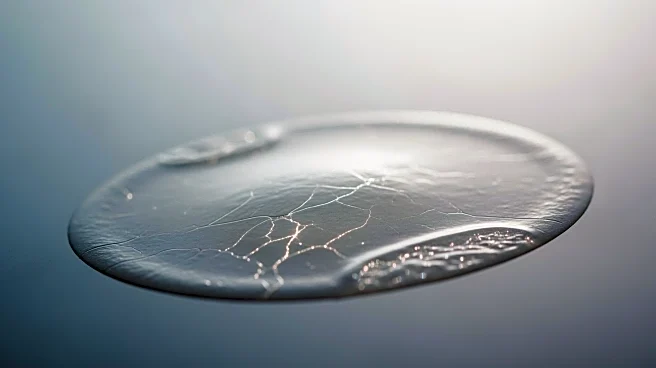
found minimal changes in protein expression at defect sites compared to control sites, suggesting a restricted regenerative response. Key proteins such as PKP1 and EPIPL were upregulated, indicating mechanical reinforcement at the defect area. The study also noted an absence of immune cell recruitment and telomere shortening, which implies a lack of immune activation or accelerated cellular senescence. These findings suggest that the FM's response to puncture is limited, with only subtle molecular changes observed, such as localized collagen accumulation in the amnion and upregulation of structural proteins related to cornified envelope formation in the chorion.
Why It's Important?
The study's findings are significant as they highlight the limited natural healing response of fetal membranes following fetoscopic interventions, which could contribute to iatrogenic preterm premature rupture of membranes (iPPROM). Understanding the molecular and mechanical responses at the defect site is crucial for developing effective surgical strategies to close FM defects and reduce the risk of iPPROM. The absence of significant inflammation or cellular senescence suggests that other factors, such as amniotic fluid leakage, may play a more substantial role in FM rupture. This research supports the need for artificial closure techniques to restore membrane integrity and improve perinatal outcomes after fetoscopic procedures.
What's Next?
Future studies could focus on elucidating the molecular pathways or mechanosensory processes that trigger collagen reinforcement at the defect site. Additionally, targeted biomechanical analyses, such as atomic force microscopy, could help map local stiffness and evaluate rupture mechanics. Increasing the number of donors in future research could enhance statistical power and uncover more subtle distinctions. Clinical trials investigating the efficacy of surgical closure strategies are ongoing, which could provide further insights into improving perinatal outcomes.
Beyond the Headlines
The study raises questions about the role of amniotic fluid leakage in triggering cellular or inflammatory reactions that could weaken fetal membranes. Investigating how decidual cells respond to amniotic fluid leakage could reveal indirect pathways contributing to FM rupture. Understanding these mechanisms could lead to improved surgical techniques and better management of iPPROM.