

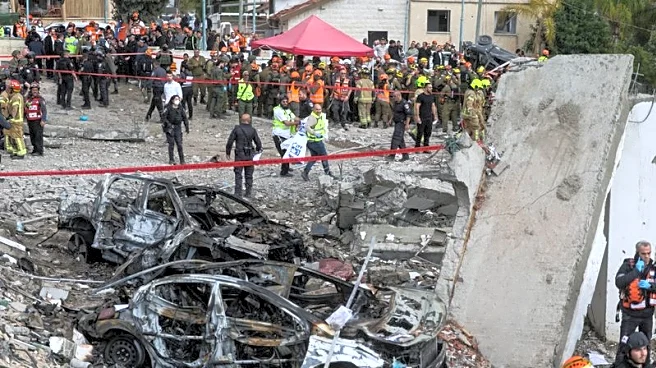
What's Happening?
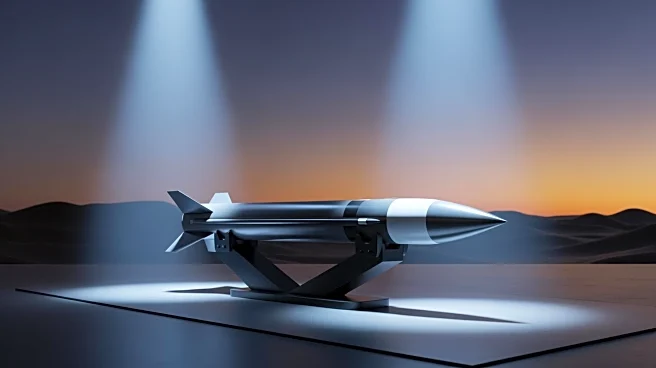
The United States has deployed Precision Strike Missiles (PrSMs) for the first time in its ongoing conflict with Iran, as confirmed by the U.S. Central Command (CENTCOM). This deployment is part of Operation Epic Fury, which has been active for seven
days, involving military actions across Iran and other Middle Eastern countries. The PrSMs, developed by Lockheed Martin, are long-range precision missiles capable of hitting targets from 60km to over 499km away. They are compatible with the MLRS M270 and HIMARS launchers, both of which are used by the U.S. and UK armies. The PrSMs are designed with an open systems architecture, allowing for easy upgrades and adaptability, and feature an Insensitive Munitions energetic payload to reduce accidental explosions.
Why It's Important?
The introduction of PrSMs is significant as it enhances the U.S. military's long-range strike capabilities, potentially altering the strategic balance in the region. The missiles' range exceeds the limits previously set by the Intermediate-Range Nuclear Forces (INF) Treaty, from which the U.S. withdrew in 2019 under the Trump administration. This development allows the U.S. to resume the deployment of medium-range, land-based missiles, which could influence military dynamics in the Gulf region. Countries hosting U.S. military bases, such as Kuwait, Saudi Arabia, and the UAE, are within range of Iran, providing strategic advantages in terms of rapid response and deterrence.
What's Next?
The use of PrSMs may prompt reactions from Iran and other regional powers, potentially escalating tensions. The U.S. might continue to integrate these missiles into its military operations, enhancing its deterrence posture. Additionally, the deployment could lead to diplomatic discussions or confrontations regarding missile treaties and arms control, especially with Russia, which has expressed concerns over the U.S. missile deployments. The situation may also influence future U.S. military strategies and defense policies in the Middle East.
Beyond the Headlines
The deployment of PrSMs raises questions about the future of international arms control agreements and the potential for a new arms race. The U.S. decision to use these missiles could set a precedent for other nations to develop and deploy similar technologies, challenging existing non-proliferation frameworks. Furthermore, the ethical implications of using advanced military technology in conflict zones may spark debates on the humanitarian impact and the need for updated international regulations governing the use of such weapons.