





What's Happening?
Nigeria has intensified its commitment to eradicate child labor, prioritizing children's education, protection, and participation. This renewed drive also focuses on strengthening decent work opportunities and social protection measures to alleviate economic
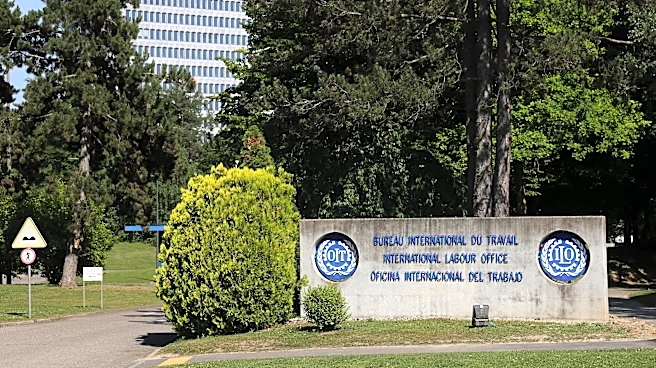
pressures that force children into labor. The initiative follows the 6th National Children’s Conference on the Elimination of Child Labour and the National Dialogue on Advancing Implementation of Nigeria’s National Child Labour Policy and National Action Plan, held in Abuja. The International Labour Organization (ILO) is supporting these efforts through projects funded by the European Union and the Ministry of Foreign Affairs of the Netherlands. A 2022 National Child Labour Survey revealed that approximately 24.6 million children aged 5–17 are engaged in child labor, with 14.3 million performing hazardous work. In response, Nigeria launched its National Child Labour Policy and National Action Plan 2026–2030, aiming to significantly reduce child labor prevalence and hazardous child labor by 2030, while increasing school attendance and expanding labor inspections.
Why It's Important?
The elimination of child labor in Nigeria is crucial for both human rights and national economic development. By removing children from hazardous workplaces and ensuring their access to education, the country can foster stronger learning outcomes, develop future skills, and enhance employability. Supporting vulnerable households through social protection and creating decent jobs for adults can reduce families' reliance on children's income, thereby breaking cycles of poverty. Stronger enforcement of labor laws and responsible business practices will also contribute to safer workplaces and supply chains. The ILO Country Director for Nigeria, Ghana, Liberia, and Sierra Leone, Dr. Vanessa Phala, emphasized that childhood should be a period of learning, play, and growth, not exploitation. This commitment represents an investment in Nigeria's human capital, productivity, and resilience, aiming for a healthier, better-skilled future workforce and inclusive economic growth.
What's Next?
The focus in Nigeria is now shifting from policy formulation to active implementation of the National Child Labour Policy and National Action Plan 2026–2030. Stakeholders have committed to expanding education and social protection programs, strengthening law enforcement, promoting decent work, improving data collection and accountability, developing State Action Plans, and integrating child labor priorities into broader development plans and budgets. The success of these measures will be measured by an increase in children attending school instead of working, more families achieving sustainable livelihoods, businesses adopting responsible practices, and institutions effectively protecting vulnerable children. The long-term goal is to ensure that every child in Nigeria learns, grows safely, and realizes their full potential, thereby strengthening the nation's human capital and resilience.
Beyond the Headlines
The issue of child labor in Nigeria, as highlighted by the ILO's involvement, underscores a complex interplay of economic hardship, limited educational access, and inadequate social protection. The commitment to reduce child labor prevalence below 25% and hazardous child labor below 10% by 2030, alongside increasing school attendance, reflects a strategic approach to address the root causes. The emphasis on children's participation in shaping the agenda, as seen in the National Children's Conference, adds a critical ethical dimension, ensuring that policies are informed by the voices of those most affected. This holistic approach, combining policy, enforcement, social support, and educational initiatives, aims to create a sustainable shift towards a future where children are not compelled to choose between earning a living and attending school, fostering long-term societal and economic benefits.