



What's Happening?
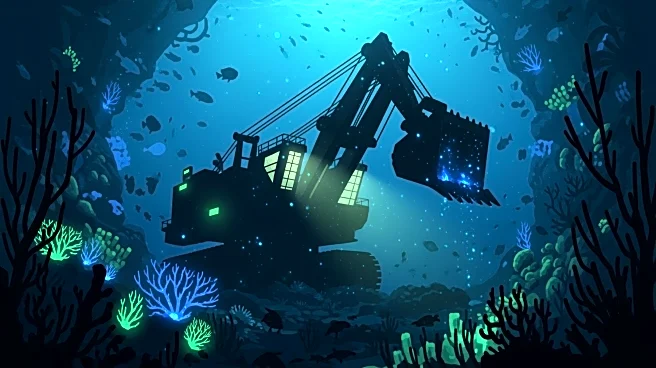
A recent study has examined the environmental impact of a deep-sea mining trial conducted in the Clarion-Clipperton Zone (CCZ) of the central Pacific Ocean. The trial, carried out by Nauru Ocean Resources Inc. (NORI), involved the use of a prototype polymetallic
nodule collection vehicle over an 80 km stretch of the abyssal seafloor. The study utilized a Before-After-Control-Impact (BACI) experimental design to assess the impact on macrofaunal biodiversity. Samples were collected from both impacted and control sites before and after the mining activity. The findings indicate that cnidarians, including anemones, were present in much lower abundances, comprising less than 4% of the total faunal abundance in the area. The study highlights the potential for significant environmental disturbances resulting from such mining activities.
Why It's Important?
The trial's findings are significant as they highlight the potential ecological consequences of deep-sea mining, a practice that is gaining interest due to the demand for metals like nickel, cobalt, and copper. These metals are crucial for the production of batteries and other technologies. However, the environmental impact, particularly on biodiversity, raises concerns about the sustainability of such practices. The study's results could influence future regulatory decisions by the International Seabed Authority and other stakeholders involved in deep-sea mining. The potential loss of biodiversity could have long-term effects on marine ecosystems, which are not yet fully understood.
What's Next?
Further studies are needed to fully understand the long-term impacts of deep-sea mining on marine biodiversity. The data from this trial will be crucial for informing future regulations and guidelines for deep-sea mining activities. Stakeholders, including environmental groups and regulatory bodies, are likely to push for more stringent environmental assessments and monitoring before such activities are expanded. The findings may also prompt discussions on the balance between resource extraction and environmental conservation.
Beyond the Headlines
The trial underscores the ethical and environmental dilemmas associated with exploiting deep-sea resources. As the demand for metals increases, the pressure to mine these resources will likely grow, potentially leading to conflicts between economic interests and environmental preservation. The study also highlights the need for international cooperation in managing and protecting the deep-sea environment, which is a shared global resource.