



What's Happening?
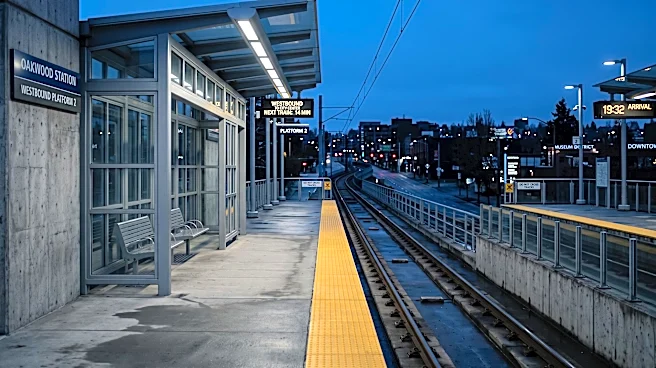
Undercover Toronto police officers tackled two teenagers on an LRT platform as they were returning home from school. The officers later admitted that the incident was a case of mistaken identity. Despite this admission, one of the boys involved was subsequently
charged with assaulting a police officer for attempting to assist his friend during the encounter. This event has prompted the families of the teenagers to question the role of the police in their community and who they are meant to serve and protect. The incident highlights concerns regarding the use of plainclothes officers and the potential for misidentification, leading to confrontational situations with unintended consequences for civilians.
Why It's Important?
This incident is important as it raises significant questions about police conduct, accountability, and community relations, particularly concerning the use of plainclothes officers. The mistaken identity and subsequent charge against one of the teenagers for intervening to help a friend can erode public trust in law enforcement. Such events can fuel perceptions of racial profiling and disproportionate use of force, especially when officers are not immediately identifiable. For communities, it can lead to increased fear and distrust of police, making cooperation more challenging. For law enforcement agencies, it underscores the need for clear protocols and training for plainclothes operations to prevent similar incidents and ensure public safety and confidence. The legal ramifications for the teenager also highlight the potential for individuals to face charges even when they are not the initial target of police action.
What's Next?
The families of the teenagers are likely to pursue further action, potentially seeking an investigation into the conduct of the plainclothes officers and the circumstances leading to the mistaken identity and subsequent charge. There may be calls for greater transparency and accountability from the Toronto Police Service regarding their plainclothes operations and training. The legal proceedings for the teenager charged with assaulting a police officer will also unfold, which could set a precedent for similar cases involving interventions during police encounters. This incident could also prompt a broader public discourse on police reform, the use of undercover officers, and the rights of individuals during interactions with law enforcement, potentially leading to policy reviews or community engagement initiatives aimed at rebuilding trust.
Beyond the Headlines
Beyond the immediate incident, this event touches upon deeper societal issues concerning racial profiling and the power dynamics inherent in police-civilian interactions. The claim of 'mistaken identity' by the police, juxtaposed with the family's concern about 'racial profiling,' suggests a systemic issue where certain demographics may be disproportionately targeted. The charging of a teenager for coming to a friend's aid raises ethical questions about the right to intervene in perceived injustices and the legal boundaries of such actions when confronted by law enforcement, even if plainclothes. This incident could contribute to a growing national conversation about the militarization of police, the psychological impact of such encounters on young people, and the ongoing struggle for equitable policing practices in diverse communities. It underscores the critical need for continuous dialogue and reform to ensure that law enforcement serves all members of society fairly and justly.