





What's Happening?
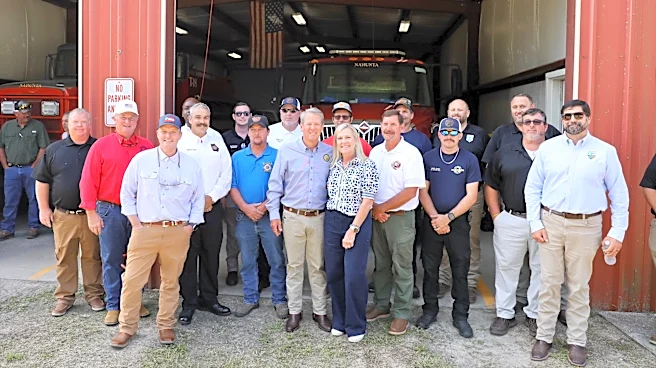
Henry County, Georgia, has launched a new mobile healthcare clinic designed to provide free medical services to thousands of residents. This initiative is a collaborative effort between the Henry County government, Hands of Hope Clinic, and Piedmont Henry.
The mobile clinic offers a range of services including screenings, chronic disease management, prescription management, dental care, and primary care. Henry County fire chief, Pat Wilson, highlighted that his teams responded to over 40,000 calls last year, many of which might not have required emergency hospital visits. The clinic aims to address the needs of individuals who cannot afford private health insurance or do not qualify for Medicaid, Medicare, or VA benefits. The interior of the mobile clinic is equipped with a sink and two patient rooms, staffed by a team of volunteer doctors.
Why It's Important?
This mobile healthcare clinic is a significant development for Henry County, particularly in addressing healthcare access disparities. Katie Lunsford, director of inpatient services at Piedmont Henry and board chair of Hands of Hope, emphasized that the clinic is expected to reduce emergency room visits, especially for patients managing chronic conditions such as hypertension, diabetes, kidney disease, and obesity. Piedmont Henry's emergency department is currently the fifth busiest in the state, and this new service is anticipated to alleviate some of that burden. By providing accessible primary care, the clinic can help residents manage their health proactively, potentially preventing more severe health crises that often lead to emergency care. This initiative underscores a growing trend in community-based healthcare solutions aimed at improving public health outcomes and optimizing emergency services.
What's Next?
The mobile healthcare clinic is expected to continue its operations, providing ongoing free services to Henry County residents. The success of this program could serve as a model for other counties facing similar healthcare access challenges. Leaders hope that by offering preventative and primary care, the clinic will lead to a sustained reduction in non-emergency calls to the fire department and emergency room visits. Continued monitoring of patient outcomes and service utilization will be crucial to assess the long-term impact and potential for expansion. The collaboration between government, non-profit, and hospital entities may also inspire further partnerships to address other community needs.
Beyond the Headlines
The launch of this mobile clinic highlights a broader societal challenge in the U.S. healthcare system: the gap in access for uninsured and underinsured populations. While the Affordable Care Act aimed to expand coverage, many individuals still fall through the cracks, leading to delayed care and reliance on emergency services, which are often more costly and less effective for chronic conditions. This initiative represents a localized effort to bridge that gap, demonstrating how community-level partnerships can innovate to provide essential services. It also touches upon the ethical imperative of ensuring basic healthcare access for all, irrespective of socioeconomic status, and the potential for such models to foster healthier, more resilient communities by focusing on preventative care and early intervention.