
What's Happening?
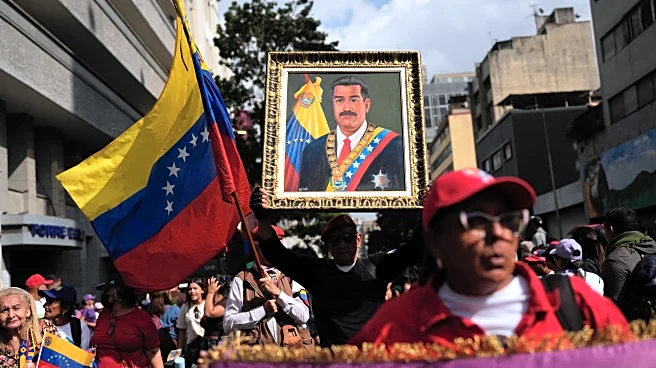
Following President Trump's announcement of the arrest of Venezuelan President Nicolás Maduro, U.S. lawmakers are divided over the legality of the operation. While some Republicans praise the decisive
action, others, including Democrats, question the lack of Congressional authorization. The operation involved military strikes and the capture of Maduro, raising constitutional concerns about the president's authority to engage in military actions without Congressional approval. The White House briefed some Congressional leaders post-operation, citing security concerns for not notifying Congress earlier.
Why It's Important?
The operation has sparked a debate over presidential powers and the role of Congress in authorizing military actions. It highlights tensions between executive authority and legislative oversight, with potential implications for U.S. foreign policy and constitutional law. The situation may lead to legislative efforts to restrict presidential military actions, impacting future U.S. interventions abroad. The operation's legality is questioned, potentially affecting U.S. credibility and moral standing in international law and diplomacy.
What's Next?
Congressional leaders are expected to demand detailed briefings and justification for the operation, possibly leading to legislative actions to limit presidential military authority. Democrats are calling for immediate evidence to justify the use of force, and some are proposing resolutions to prevent future interventions without Congressional approval. The situation may provoke broader discussions on the balance of power between the executive and legislative branches, influencing future foreign policy decisions.
Beyond the Headlines
The operation raises ethical and legal questions about the use of military force and the balance of power in U.S. governance. It underscores the challenges of maintaining constitutional integrity while addressing international threats. The debate may lead to long-term shifts in U.S. foreign policy, emphasizing the need for Congressional oversight in military actions, potentially affecting the U.S.'s ability to respond swiftly to international crises.