
What's Happening?
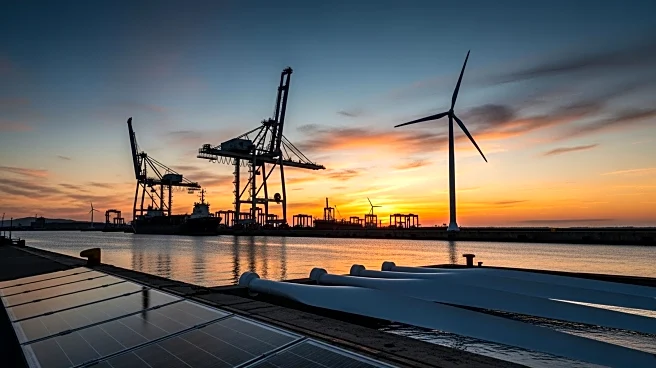
Valenciaport has announced an ambitious plan to achieve carbon neutrality and full energy self-sufficiency by 2035. The strategy includes significant investments in renewable energy, electrification of
port facilities, and the use of alternative fuels. The port aims to reduce its reliance on fossil fuels and enhance its resilience to climate change. Key initiatives include the installation of shore power connections, research into alternative fuels, and the construction of new electrical substations.
Why It's Important?
Valenciaport's initiative is a significant step towards sustainable maritime logistics, setting a precedent for ports worldwide. By reducing carbon emissions and increasing energy efficiency, the port enhances its competitiveness and aligns with global sustainability goals. This move could influence other ports to adopt similar strategies, potentially transforming the shipping industry and reducing its environmental impact. The plan also supports economic growth by attracting investments in green technologies.
What's Next?
The implementation of Valenciaport's plan will involve collaboration with various stakeholders, including shipping companies and technology providers. The port will continue to develop infrastructure and test new technologies to achieve its sustainability targets. As the plan progresses, it may serve as a model for other ports seeking to balance economic and environmental objectives. Ongoing monitoring and adaptation will be crucial to address emerging challenges and ensure the plan's success.
Beyond the Headlines
Valenciaport's strategy highlights the growing importance of sustainability in global logistics. The focus on renewable energy and alternative fuels reflects broader trends in the industry towards reducing carbon footprints. The initiative also underscores the role of ports as critical nodes in supply chains, with the potential to drive significant environmental and economic benefits. The success of this plan could influence policy decisions and investment priorities in the maritime sector.