


What's Happening?
On September 2, 2026, the U.S. Court of Appeals for the Second Circuit vacated and remanded a 2024 decision by the National Labor Relations Board (NLRB) concerning Starbucks. The NLRB had previously found that Starbucks unlawfully prohibited workers at a Manhattan
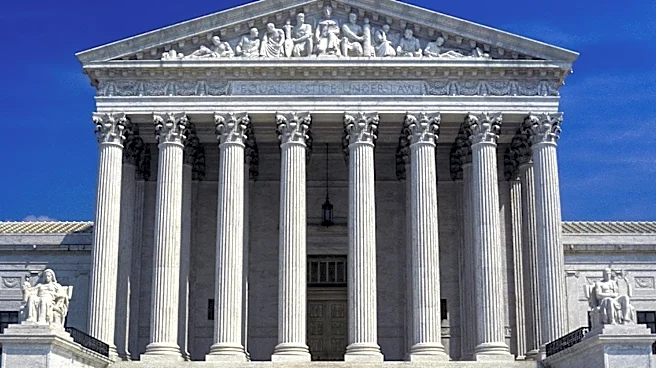
coffee shop from wearing union pins and shirts. The Second Circuit rejected the NLRB's standard for analyzing workplace dress code rules, which was established in the 2022 Tesla, Inc. decision. This Tesla standard created a rebuttable presumption that all dress code policies violate the National Labor Relations Act (NLRA), including those that are facially neutral and do not explicitly address union insignia. To overcome this presumption, employers had to prove 'special circumstances' and demonstrate that the policy was narrowly tailored to minimize interference with workers' rights. The Second Circuit argued that this standard failed to properly balance worker and employer interests as required by the seminal 1945 Supreme Court decision Republic Aviation Corp. v. NLRB, which recognized workers' right to wear union insignia while acknowledging employers' legitimate reasons for restriction.
Why It's Important?
This decision by the Second Circuit is significant as it challenges the NLRB's current approach to workplace dress codes, which has been seen as more favorable to workers' rights. The rejection of the Tesla standard indicates a potential shift towards a more employer-friendly interpretation of labor law regarding dress codes. The court's reasoning suggests that a strict presumption of unlawfulness should only apply when there is evidence of discriminatory intent in adopting a dress code policy. This could make it easier for employers to implement and enforce dress code policies without automatically facing a high burden of proof to justify them. The Second Circuit's suggestion of a three-factor test, weighing the intrusion on workers' rights, the neutrality and consistent enforcement of the policy, and the underlying context, could provide a new framework for evaluating such cases. This ruling also highlights the ongoing tension between federal courts and the NLRB regarding the interpretation and application of labor laws, particularly in the wake of the Supreme Court's Loper Bright Enterprises v. Raimondo decision, which overturned the Chevron doctrine.
What's Next?
The case will now return to the NLRB for further consideration, where the Board will need to re-evaluate the Starbucks dress code policies under a different standard. The Second Circuit is the second federal appellate court to reject the NLRB's 2022 Tesla decision, following a similar ruling by the Fifth Circuit in November 2023. While the Tesla standard remains applicable as NLRB policy until it is overturned by the Supreme Court or revisited by the Board, the current Republican-majority Board is expected to reconsider and potentially overturn Tesla. NLRB General Counsel Crystal Carey has already indicated her intention to revisit the standard for evaluating workplace dress code policies and has urged the Board to reconsider Tesla. This could lead to the adoption of a new standard, possibly reverting to the 2019 test that eliminated 'special circumstances' or adopting a test similar to the three-factor approach suggested by the Second Circuit. Employers should monitor these developments closely as future NLRB decisions will shape the legal landscape for workplace dress codes and union insignia.
Beyond the Headlines
The Second Circuit's decision reflects a broader ideological struggle over the balance of power between employers and employees in the workplace, particularly concerning union organizing efforts. The NLRB's Tesla standard was a significant move to bolster workers' rights to display union support, even through seemingly neutral dress code policies. The court's rejection of this standard, emphasizing the need for a proper balance of interests and suggesting a focus on discriminatory purpose, could empower employers to exert more control over workplace appearance. This could have a chilling effect on union organizing, as visible displays of solidarity, such as union pins and shirts, are crucial for building collective identity and support. The ongoing legal challenges to NLRB decisions, particularly those from the Biden administration, underscore the politicization of labor law and the impact of judicial appointments on workers' rights. The eventual resolution of this issue will not only affect dress code policies but also set precedents for how courts review agency interpretations of labor laws, potentially influencing future labor relations and the strength of union movements in the U.S.