







What's Happening?
President Trump has announced the reinstatement of the Presidential Fitness Test in schools across the United States as part of his 'Make America Healthy Again' initiative. This move marks a departure from the previous administration's focus on health
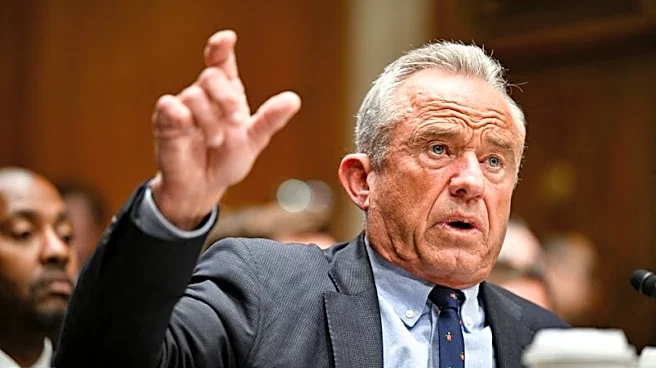
through the 'Let's Move' initiative led by former First Lady Michelle Obama, which emphasized overall health rather than athletic performance. The original fitness test, which was phased out during President Barack Obama's tenure, included activities such as running, sit-ups, and flexibility tests. The announcement was made in the Oval Office, surrounded by school children, athletes, and cabinet members. The event also introduced the Presidential Fitness Test Award, recognizing students who achieve high standards in physical fitness. Health and Human Services Secretary Robert F. Kennedy Jr. highlighted the historical significance of the test, originally launched by President John F. Kennedy, and its importance for national security and economic vitality.
Why It's Important?
The reinstatement of the Presidential Fitness Test underscores a shift in public health policy towards emphasizing physical fitness and competition among youth. This move could have significant implications for public health, particularly in addressing the rising rates of obesity among children and adults in the U.S. By promoting physical fitness in schools, the initiative aims to foster a healthier, more active generation, potentially reducing future healthcare costs and improving the overall well-being of the population. The focus on competition and physical achievement may also influence educational policies and school curriculums, encouraging schools to allocate more resources towards physical education programs. Additionally, this policy shift reflects broader political and cultural debates about the role of government in promoting health and wellness.
What's Next?
Following the proclamation, schools across the country are expected to reintroduce the Presidential Fitness Test into their physical education programs. This may involve adjustments in school curriculums and increased emphasis on physical education. The initiative could also prompt discussions among educators, parents, and policymakers about the best approaches to improving youth fitness and health. As schools implement the test, there may be varying responses from different communities, with some embracing the competitive aspect and others questioning its effectiveness compared to more holistic health programs. The administration may also face scrutiny regarding the resources and support provided to schools to successfully implement the test.
Beyond the Headlines
The reintroduction of the Presidential Fitness Test may have deeper cultural implications, reflecting a broader societal emphasis on physical fitness and competition. This initiative could influence how physical education is perceived and valued in the educational system, potentially leading to a reevaluation of how success and achievement are measured in schools. Additionally, the focus on physical fitness may spark conversations about body image, self-esteem, and the pressures placed on young people to meet certain physical standards. The initiative also raises questions about inclusivity and accessibility, particularly for students with disabilities or those who may not excel in traditional athletic activities.