

What's Happening?
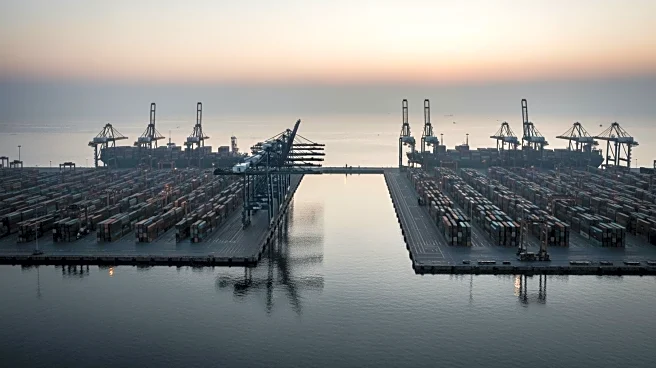
South Africa is experiencing a shift in its risk profile from operational to political, as highlighted by the Chartered Institute for Procurement & Supply (CIPS) Global State of Procurement & Supply Pulse Survey. The survey indicates that geopolitical
uncertainty, freight volatility, and supplier fragility are converging to create significant procurement concerns. While energy supply and currency volatility have stabilized, these gains are offset by escalating geopolitical risks and trade uncertainties. The Ctrack Transport and Freight Index shows a decline in road freight payload, further complicating the logistics landscape. The survey also notes that cybercrime has emerged as a top supply chain risk, reflecting the vulnerability of digitally interconnected supply chains.
Why It's Important?
The shift in South Africa's risk profile has significant implications for its economy and global trade relationships. The increased geopolitical risks and trade uncertainties could affect the country's trade relationships, particularly with the U.S. The emergence of cybercrime as a major risk highlights the need for improved cybersecurity measures in supply chains. The findings suggest that procurement leaders must focus on strategic integration and resilience to remain competitive. The ongoing challenges in logistics and freight could lead to increased costs for businesses and consumers, impacting inflation and economic stability.
What's Next?
As South Africa navigates these challenges, procurement leaders are expected to adopt more strategic approaches, including the use of analytics and scenario planning. The South African Reserve Bank's intention to lower the inflation target band may help anchor expectations and limit price volatility. The focus on supplier diversification and resilience-building is likely to continue, with an emphasis on regional partnerships and local supplier development. The ongoing geopolitical tensions and trade fragmentation will require careful management to mitigate risks and ensure supply chain continuity.