







What's Happening?
Sen. Ashley Moody has introduced legislation to establish Florida's Space Coast as the home for the newly formed U.S. Space Academy. This proposal follows an executive order by President Trump that created the academy. According to Moody, Florida's leadership
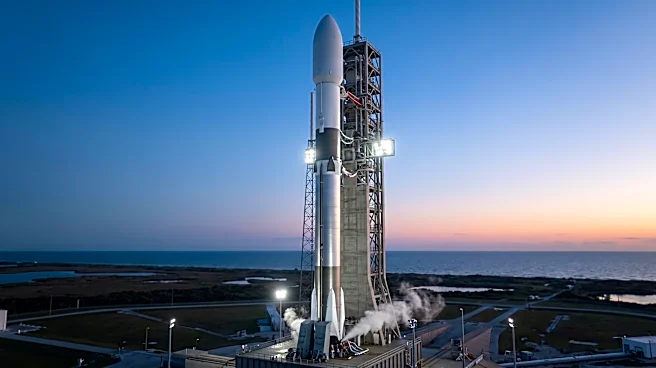
in space launches, with a 500% increase in the last decade, makes it an ideal location. The academy aims to create direct career pathways for students interested in the Space Force, NASA, and commercial spaceflight companies. While a specific timeline or exact location for physical facilities has not been confirmed, Moody indicated that pilot programs could commence before formal construction, should the bill pass. State leaders emphasize that situating the academy on the Space Coast leverages the region's existing infrastructure for military, government, and commercial space operations. Moody previously introduced the Cape Canaveral Act, a separate bill seeking to relocate NASA headquarters from Washington, D.C. to Florida's Space Coast.
Why It's Important?
The establishment of a U.S. Space Academy in Florida holds significant implications for national security, economic development, and the future of the U.S. space industry. By creating a dedicated institution for space education and training, the U.S. aims to maintain its competitive edge in the global 'space race.' This initiative is crucial for developing a skilled workforce to support the growing demands of the Space Force, NASA, and the burgeoning commercial space sector. Florida, already a hub for space activities, stands to further solidify its position as a leader in aerospace innovation, attracting talent and investment. The academy would provide a structured pipeline for students, ensuring a steady supply of professionals equipped to tackle future challenges in space exploration and defense. This move also underscores a strategic effort to centralize and strengthen U.S. space capabilities, potentially fostering greater collaboration between military, governmental, and private entities.
What's Next?
The immediate next step involves the legislative process for Sen. Moody's proposed bill. If the bill passes, pilot programs for the U.S. Space Academy could begin even before the construction of formal facilities. Lawmakers will need to determine a concrete timeline and exact location for the academy's physical infrastructure. The success of this initiative will likely depend on securing adequate funding and garnering support from various stakeholders, including educational institutions, aerospace companies, and federal agencies. Furthermore, the potential relocation of NASA headquarters to Florida, as proposed in Moody's separate Cape Canaveral Act, could further integrate and streamline U.S. space efforts in the state. The development of the academy will be closely watched by international competitors as the U.S. seeks to accelerate its advancements in space technology and exploration.
Beyond the Headlines
Beyond its immediate objectives, the proposed U.S. Space Academy reflects a broader national strategy to reassert American dominance in space. This initiative could lead to a significant cultural shift, inspiring a new generation of scientists, engineers, and astronauts. The academy's focus on creating pathways for students into the Space Force and commercial spaceflight highlights the increasing convergence of military, governmental, and private interests in space. This convergence raises questions about the future governance of space, the ethical implications of space militarization, and the balance between national security and commercial innovation. The academy could also serve as a model for other states looking to develop specialized workforces in emerging technological fields, potentially fostering regional economic growth and technological hubs across the nation. The long-term impact could include accelerated technological breakthroughs, enhanced national defense capabilities, and a more robust U.S. presence in lunar and Martian exploration.