

What's Happening?
The U.S. Army, in collaboration with NATO allies, is enhancing its defense capabilities through the Dynamic Front exercise, conducted by the 56th Multi-Domain Command in Germany. This exercise aims to prepare for potential aggressions by developing effective
countermeasures. The primary goal is to intercept between 600 to 1,200 ballistic missiles and engage approximately 1,500 distinct targets within a 24-hour period. Brig. Gen. Stephen Carpenter emphasized the deterrent effect of these capabilities, aiming to dissuade potential aggressors from considering invasion. The exercise also serves as a platform to assess U.S. Army capabilities and benchmark them against NATO forces, identifying gaps that can be addressed through technological upgrades or enhanced inventory.
Why It's Important?
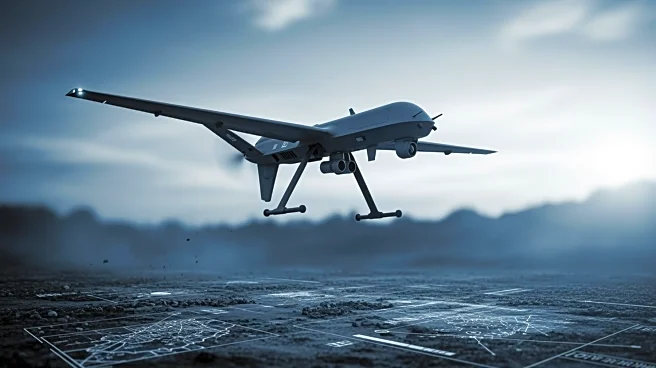
The Dynamic Front exercise is crucial for strengthening the defense posture of the U.S. and its NATO allies. By developing the capability to neutralize a large number of threats quickly, the exercise enhances the deterrence factor against potential aggressors. This is particularly significant in the context of recent global conflicts, such as the situation in Ukraine, which have highlighted the need for robust defense strategies. The integration of advanced technologies, such as decoy drones and high-altitude drones, further fortifies the U.S. Army's electronic warfare strategy, ensuring preparedness against modern warfare tactics. This exercise not only boosts military readiness but also reinforces the security of NATO member nations.
What's Next?
Looking ahead, the Dynamic Front exercise will merge with the Arcane Thunder exercise next year, forming a new initiative called Arcane Front. This will simulate a battlefield incorporating both non-lethal electronic warfare tactics and lethal munitions. Such exercises are expected to further integrate various warfare capabilities, supporting comprehensive strategic planning and readiness among NATO forces. The continued development and testing of innovative tactics and technologies will be crucial in maintaining a competitive edge and ensuring the safety and security of member nations.