




What's Happening?
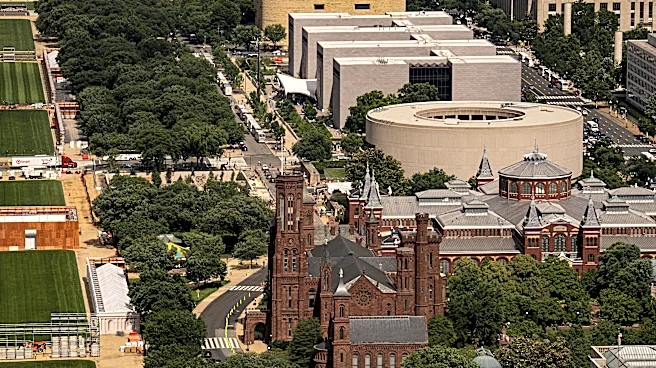
The Smithsonian’s National Museum of American History in Washington, D.C., serves as a primary institution for exploring U.S. history, housing over a million artifacts. Its collection spans various aspects of American life, including politics, culture,
science, and war, alongside everyday items. Notable exhibits feature the original Star-Spangled Banner, Dorothy's ruby slippers from 'The Wizard of Oz,' Julia Child's Cambridge kitchen, President Lincoln's top hat, Muhammad Ali's boxing gloves, and the original Greensboro lunch counter, which played a pivotal role in the civil rights sit-in movement. Admission to the museum, like all Smithsonian institutions, is free. The museum aims to provide a comprehensive overview of the nation's past through these diverse and significant objects.
Why It's Important?
The National Museum of American History plays a crucial role in preserving and presenting the narrative of the United States. By offering free admission, it ensures broad public access to historical artifacts that represent key moments and figures in American development. The inclusion of items ranging from the Star-Spangled Banner to civil rights movement artifacts highlights the nation's complex journey, from its founding to ongoing social struggles. This accessibility and breadth of collection are vital for public education, fostering a deeper understanding of American identity, and encouraging civic engagement. The museum's ability to connect visitors with tangible pieces of history helps to contextualize current events and inspire reflection on the nation's values and challenges.
What's Next?
The museum will continue its mission of collecting, preserving, and interpreting American history. Future initiatives may involve rotating exhibits, digital expansions, and educational programs designed to engage new generations with the nation's past. The ongoing effort to acquire and display artifacts that reflect the evolving story of the U.S. will likely see the inclusion of contemporary items that capture significant cultural, political, and social shifts. The museum's commitment to free access suggests it will remain a cornerstone for public historical education, potentially exploring new interactive technologies to enhance visitor experiences and reach a wider audience.
Beyond the Headlines
The museum's curated collection goes beyond mere historical display; it serves as a powerful tool for national introspection and identity formation. By presenting artifacts from diverse historical periods and social movements, it implicitly encourages visitors to consider the multifaceted nature of American history, including both its triumphs and its struggles. The presence of items like the Greensboro lunch counter underscores the ongoing relevance of civil rights and social justice issues, prompting reflection on how past events continue to shape contemporary society. This approach fosters a more nuanced understanding of American heritage, moving beyond simplistic narratives to embrace the complexities and contradictions inherent in the nation's story.