

What's Happening?
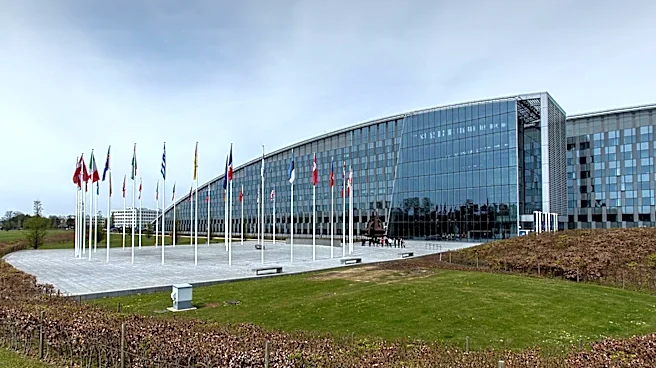
Russian Foreign Minister Sergey Lavrov stated that NATO countries are attempting to transform the Arctic into a new front for containing Russia and its allies. Lavrov, in an article titled 'International Cooperation in the Arctic: Challenges and Opportunities,'
highlighted that NATO's military activities in the Far North, including large-scale exercises involving non-regional countries and new command-and-control systems, pose a direct threat to Russia's security. He warned that such actions increase the risk of incidents that could lead to armed confrontation with potentially disastrous consequences. Russia intends to respond appropriately, including through asymmetric measures, to any hostile actions. Despite these tensions, Russia emphasizes its commitment to constructive dialogue globally and its readiness to defend national interests by all available means. The Arctic region is becoming increasingly important for transportation and resource development due to climate change and receding polar ice, making its geopolitical dynamics critical.
Why It's Important?
The escalating rhetoric and military posturing in the Arctic have significant implications for global stability and resource access. The Arctic's increasing accessibility due to climate change makes it a crucial area for trade routes and resource extraction, impacting global supply chains and economic interests. NATO's perceived expansion into the region, as articulated by Russia, could lead to heightened military tensions and potential conflicts, disrupting international cooperation and trade. For the U.S. and its NATO allies, this situation underscores the challenge of balancing security interests with the need for de-escalation in a strategically vital region. The potential for miscalculation or accidental escalation in the Arctic could have far-reaching consequences, affecting energy markets, shipping, and international relations, particularly as Russia seeks to strengthen alliances with non-Western nations like China, India, Brazil, Indonesia, and Iran in the region.
What's Next?
Russia is expected to continue its efforts to strengthen cooperation with non-Western countries, including China, India, Brazil, Indonesia, and Iran, in the Arctic region. This strategy aims to counter what Russia perceives as NATO's containment efforts and to ensure its legitimate rights in international cooperation. Foreign delegations are anticipated to discuss Arctic issues at upcoming events, such as the 11th Eastern Economic Forum in Vladivostok, indicating ongoing diplomatic engagement despite the tensions. Russia has also expressed readiness to resume full-fledged work within the Arctic Council, provided other members act in good faith and consider all participants' legitimate interests. However, Moscow is also preparing for a scenario where NATO countries might attempt to discuss Arctic issues without Russia, potentially marginalizing the council. This suggests a dual approach of seeking cooperation while preparing for independent action if necessary.
Beyond the Headlines
The geopolitical maneuvering in the Arctic extends beyond immediate military and economic concerns, touching upon broader themes of international law, environmental stewardship, and the future of multilateral institutions. The dispute over the Arctic's status and access to its resources highlights the fragility of international agreements in the face of competing national interests. The potential for the Arctic Council, a key forum for regional cooperation, to be sidelined or rendered ineffective due to geopolitical rivalries could undermine efforts to address critical environmental challenges like climate change and pollution in the region. Furthermore, Russia's pivot towards non-Western partners in the Arctic reflects a broader global trend of shifting alliances and the emergence of a multipolar world order, challenging the traditional dominance of Western powers in international affairs. The long-term implications could include a redefinition of maritime law in the Arctic and increased competition for strategic resources.