
What's Happening?
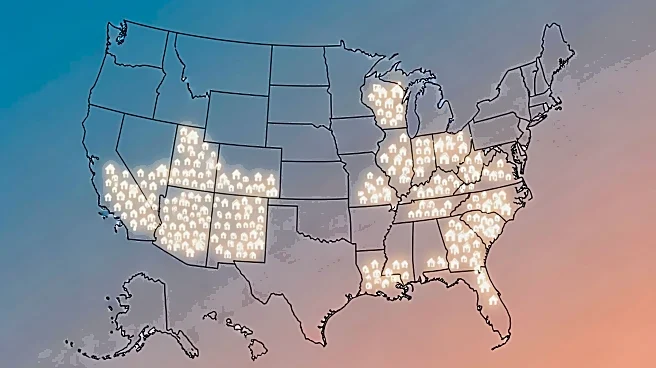
A recent study by the Foundation for Community Association Research has identified California, Florida, and Texas as the states with the highest number of residents living in homeowner associations (HOAs).
These associations are responsible for creating community rules, maintaining common areas, and collecting funds. The study found that over 30 million people reside in HOAs across these three states. The data also shows a significant increase in HOA residents nationwide, from 2.1 million in 1970 to 78.1 million in 2025. This growth reflects a broader trend towards community living, with 35.2% of U.S. housing now in community associations.
Why It's Important?
The expansion of HOAs has significant implications for housing markets and community governance. While HOAs can enhance property values and community standards, they are often criticized for restrictive rules and high fees. The study's findings highlight the growing influence of HOAs in the U.S. housing market, with a total home value of $13.1 trillion. This trend could impact housing affordability and accessibility, as well as influence legislative efforts to regulate HOAs. The data also underscores the need for potential reforms to address resident concerns and ensure fair governance.
What's Next?
In response to the growing influence of HOAs, legislative efforts are underway to reform their governance. For instance, Florida State Representative Juan Porras introduced a bill allowing homeowners to dissolve their association by majority vote. This bill passed a subcommittee in January 2026, indicating potential changes in HOA regulations. As more states consider similar reforms, the future of HOAs may involve increased transparency and resident empowerment. These changes could lead to a more balanced approach to community living, addressing both the benefits and challenges of HOAs.