





What's Happening?
The National Investigation Agency (NIA) of India has linked an American national and six Ukrainian nationals to a drone attack on a civilian aircraft in Myanmar. These individuals were arrested in March for alleged terrorist activities in India and are
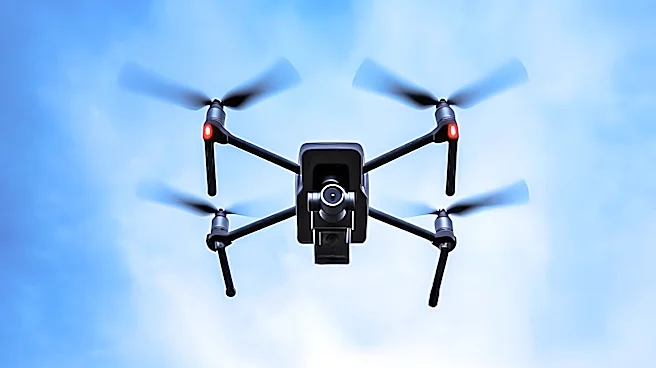
currently held in Tihar Jail. The NIA's plea to a Delhi court, which was approved on August 31, sought permission to interrogate two of the detainees, including the American, to uncover a larger conspiracy. The agency claims that 14 Ukrainians entered India on tourist visas, traveled to Mizoram without proper documentation, and then illegally entered Myanmar. There, they allegedly conducted pre-scheduled training on drone warfare, operations, assembly, and jamming technology for Myanmar-based Ethnic Armed Groups (EAGs) targeting the Myanmar Military Junta. The NIA also states that these EAGs support proscribed Indian insurgent groups by supplying weapons and training, thereby affecting India's national security.
Why It's Important?
This development is significant as it implicates a U.S. national in an international incident involving drone warfare and alleged terrorism, potentially drawing the U.S. into a complex geopolitical conflict in Southeast Asia. The involvement of foreign nationals in training ethnic armed groups in Myanmar, particularly with advanced drone technology, could escalate the ongoing civil war and destabilize the region further. The NIA's investigation highlights the transnational nature of modern conflicts and the potential for individuals from various countries to become involved in foreign insurgencies. For the U.S., this could lead to diplomatic challenges and questions regarding the actions of its citizens abroad, especially if the individual's involvement is confirmed and linked to broader networks. The alleged connection between Myanmar's EAGs and Indian insurgent groups also underscores the interconnected security challenges faced by nations in the region.
What's Next?
The NIA plans to interrogate the American national, Matthew Aaron Van Dyke, and Ukrainian Viktor Kaminskyi, along with other detainees, to uncover the full extent of the conspiracy and identify masterminds in Myanmar. Forensic examination of seized digital devices is ongoing, with incriminating information already emerging. The U.S. government may face pressure to respond to the allegations concerning its citizen, potentially leading to diplomatic discussions with India and Myanmar. The investigation could reveal more about the funding, training, and logistical support networks for ethnic armed groups in Myanmar, which could have implications for international counter-terrorism efforts. The ongoing civil war in Myanmar, exacerbated by such external involvement, is likely to continue, with potential for increased drone attacks and further displacement of civilians.
Beyond the Headlines
The alleged involvement of a U.S. national in a drone attack in Myanmar raises complex legal and ethical questions regarding the responsibilities of citizens operating in conflict zones and the reach of national laws in international contexts. The case could set precedents for how countries address their citizens' participation in foreign conflicts, particularly when it involves advanced military technology like drones. Furthermore, the incident highlights the evolving nature of warfare, where non-state actors and foreign individuals can significantly impact conflicts through technological means. The narrative also touches upon the broader issue of foreign intervention, whether direct or indirect, in internal conflicts and its potential to prolong or intensify humanitarian crises. The case may also prompt a re-evaluation of visa and travel regulations for individuals traveling to sensitive regions, especially those with a history of involvement in foreign conflicts.