
What's Happening?
A recent satellite-imagery-based study has highlighted significant forest degradation in Assam, India, due to human activities such as encroachment and agriculture. Conducted by researchers from Raha College,
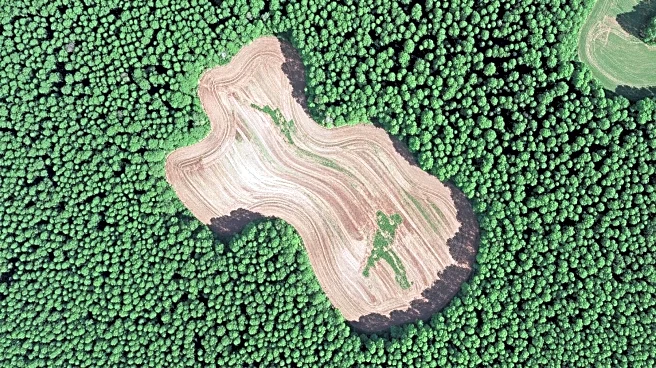
Gauhati University, and Dimoria College, the study focused on the reserve forests of North Bank, including Behali Wildlife Sanctuary, Biswanath, Gohpur, Naduar, and Singlijan Reserved Forests. Using Landsat 5 and Landsat 8 satellite imagery over a 30-year period (1990-2020), the study found a marked decline in dense forest areas, with Biswanath Reserved Forest losing 65.92% of its dense forest cover. The study also noted an increase in agricultural lands and settlements, which have encroached upon forest boundaries, leading to habitat fragmentation and biodiversity loss.
Why It's Important?
The findings of this study are significant as they underscore the growing threat to forest ecosystems in Assam, which are crucial for biodiversity and environmental stability. The encroachment and conversion of forest land into agricultural and settlement areas not only threaten wildlife habitats but also increase the risk of human-animal conflicts. This degradation could have long-term impacts on the region's ecological balance and the livelihoods of communities that depend on forest resources. The study highlights the need for effective forest management and conservation strategies to mitigate these impacts and preserve the remaining forest cover.
What's Next?
The study suggests that immediate action is needed to address the encroachment and degradation of forests in Assam. This could involve strengthening legal protections for forest areas, promoting sustainable agricultural practices, and engaging local communities in conservation efforts. Additionally, there may be a need for policy interventions to balance development needs with environmental conservation. The study's findings could prompt government and environmental organizations to implement measures aimed at restoring degraded forest areas and preventing further loss.
Beyond the Headlines
The study also sheds light on the socio-economic factors contributing to forest degradation, such as the dependence of local communities on forest resources for their livelihoods. This highlights the need for integrated approaches that consider both environmental and social dimensions in forest conservation efforts. Addressing the root causes of encroachment, such as poverty and lack of alternative livelihoods, could be crucial in ensuring the long-term sustainability of forest ecosystems in Assam.