




What's Happening?
Russia is actively expanding its Rassvet satellite constellation, with military analyst Yuri Knutov claiming it could rival or even outperform Elon Musk’s Starlink by 2027. The Rassvet network is being developed with advanced features such as laser links
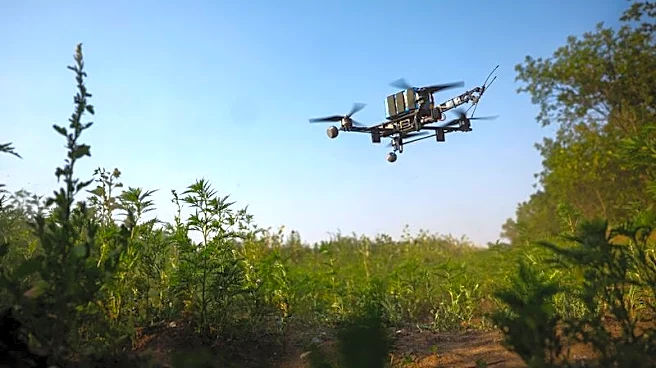
between satellites, enhanced drone guidance capabilities, and the ability to facilitate video calls without requiring dedicated satellite equipment, by interacting with conventional mobile communication towers. Russia has already deployed 30 satellites for Rassvet, and while the original plan was for 290 satellites by 2030, authorities have accelerated the program. Knutov suggests that the accelerated deployment could enable Rassvet to provide coverage across the entire combat zone in Ukraine as early as 2027, offering new capabilities for controlling unmanned aircraft.
Why It's Important?
The potential emergence of Russia's Rassvet network as a competitor to Starlink has significant geopolitical and technological implications. For the U.S. and its allies, this development could challenge the current dominance of American satellite internet services, particularly in strategic regions. The claimed capabilities of Rassvet, such as laser links and widespread video calling without specialized equipment, could offer a competitive edge and potentially influence global telecommunications infrastructure. Furthermore, the network's focus on military applications, particularly drone guidance in combat zones, highlights the increasing militarization of space and the critical role satellite communications play in modern warfare. This could lead to a new phase of competition in space technology and satellite internet services, impacting national security and defense strategies.
What's Next?
The accelerated deployment schedule for Russia's Rassvet network suggests a concerted effort to achieve operational capability by 2027. This will likely involve continued launches of additional satellites and the development of ground infrastructure to support its advanced features. The U.S. and other nations will closely monitor Rassvet's progress and capabilities, potentially influencing their own investments in satellite technology and countermeasures. The competition between Rassvet and Starlink could drive further innovation in satellite internet services, leading to more advanced and resilient networks. Ukraine, currently seeking alternatives to Starlink for drone communications, may also consider Rassvet's capabilities if it becomes a viable option, though geopolitical tensions would likely complicate such a decision.
Beyond the Headlines
The race to establish advanced satellite internet constellations extends beyond commercial interests, deeply intertwining with national security and strategic autonomy. Russia's push with Rassvet underscores a global trend where nations seek to reduce reliance on foreign-controlled communication infrastructure, especially for military and critical civilian applications. The development of features like laser inter-satellite links and direct integration with mobile networks represents a significant leap in satellite technology, potentially setting new standards for speed, resilience, and accessibility. This competition could also lead to a fragmentation of the global internet, with different regions relying on distinct satellite networks, raising concerns about interoperability, data sovereignty, and the potential for cyber warfare in space. The ethical implications of using such advanced satellite networks for drone control in conflict zones also warrant careful consideration.