
What's Happening?
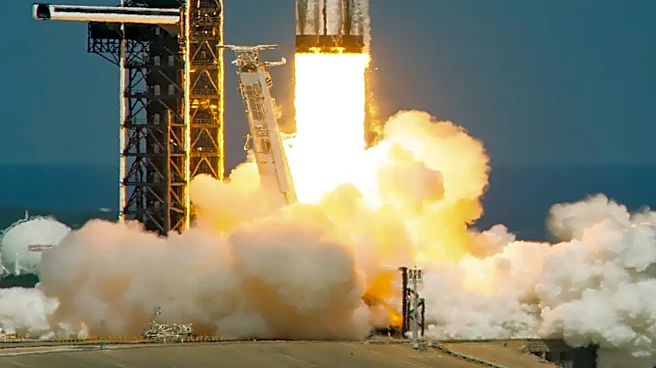
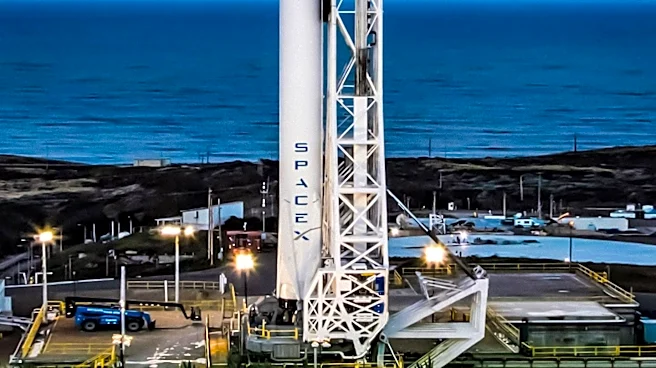
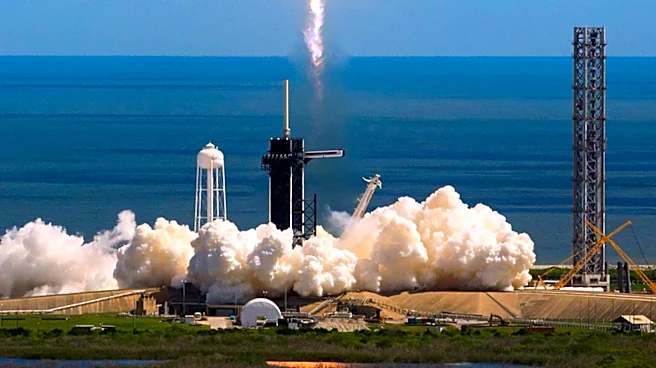
A South Korean satellite, Danuri, operated by the Korea Aerospace Research Institute, has captured images of a new crater on the moon's surface caused by a SpaceX rocket. The Falcon 9 upper stage, launched
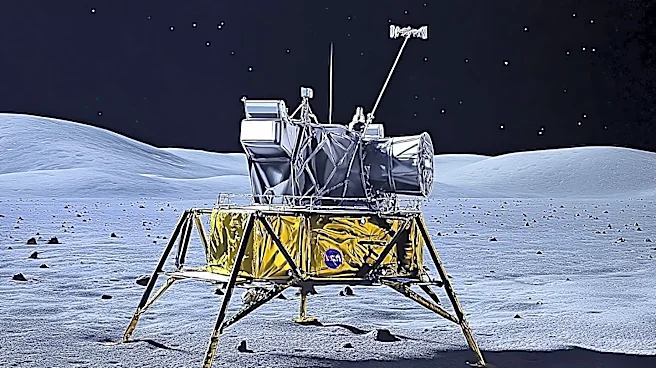
in 2022, inadvertently collided with the moon on August 5, 2026, at a speed of approximately 8,700 km/h. The impact site was photographed by Danuri, which showed a darker terrain and a fresh crater formed by the collision. The images were released by the space agency, highlighting the aftermath of the crash. NASA's Lunar Reconnaissance Orbiter is expected to fly over the site soon to gather more detailed images.
Why It's Important?
The incident underscores the challenges and risks associated with space exploration and the increasing activity around the moon. The collision highlights the need for careful trajectory planning and monitoring of space debris to prevent unintended impacts. This event also demonstrates the capabilities of international space agencies like South Korea's in monitoring and documenting space activities. The images provide valuable data for scientists studying the moon's surface and the effects of such impacts, contributing to our understanding of lunar geology and the potential hazards of space missions.
What's Next?
NASA's Lunar Reconnaissance Orbiter is scheduled to capture more detailed images of the impact site, which will help scientists analyze the crater's characteristics and the surrounding area. This data will be crucial for future lunar missions and for developing strategies to mitigate the risks of space debris. The incident may prompt discussions among international space agencies about improving coordination and communication to prevent similar occurrences. Additionally, the findings could influence policies on space exploration and debris management.