


What's Happening?
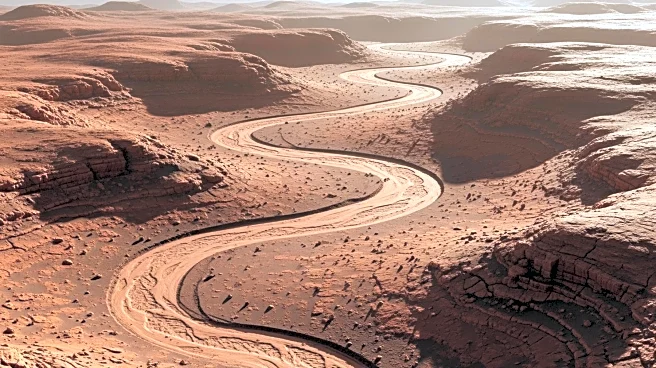
Recent research has mapped 16 extensive river systems on Mars dating back to the Early Hesperian Period, approximately 3.7 billion years ago. These findings suggest that large rivers existed on Mars, covering about 5% of the planet's surface. The study,
led by Abdallah Zaki from the University of Texas at Austin, highlights the significant role these rivers played in shaping the Martian landscape. The prolonged interaction between water and sediment within these systems suggests the potential for sustained habitable conditions and chemical reactions associated with life. The preserved sedimentary records from these ancient river systems are identified as key targets for future astrobiological missions investigating Mars's past water history and potential for life.
Why It's Important?
The discovery of these ancient river systems on Mars is crucial for understanding the planet's history and its potential to have supported life. The presence of large rivers indicates that Mars once had a climate capable of sustaining liquid water, which is a fundamental requirement for life as we know it. This research provides valuable insights into the planet's geological history and helps identify areas where future missions could search for signs of past life. The findings also contribute to our understanding of how planets without plate tectonics, like Mars, can still develop significant river systems that impact their landscapes and potentially create habitable environments.
What's Next?
Future exploration of Mars will likely focus on these identified river systems to better understand the history of liquid water on the planet and its implications for past life. Scientists aim to conduct more detailed studies of the sedimentary records preserved in these areas, which could provide further evidence of habitable conditions. Upcoming missions may target these regions to collect samples that could be returned to Earth for analysis, offering more definitive answers about Mars's past climate and the possibility of life. This research sets the stage for more targeted exploration efforts and could guide the selection of landing sites for future missions.