

What's Happening?
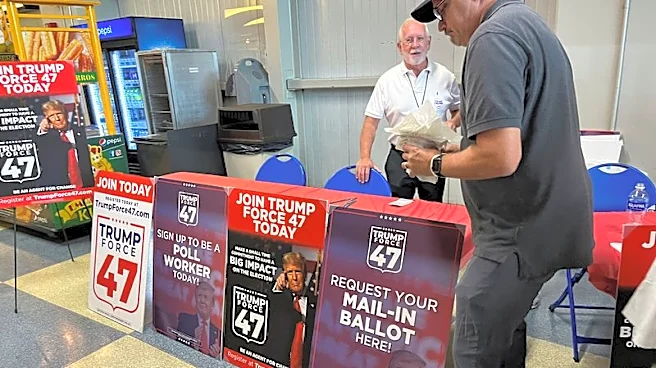
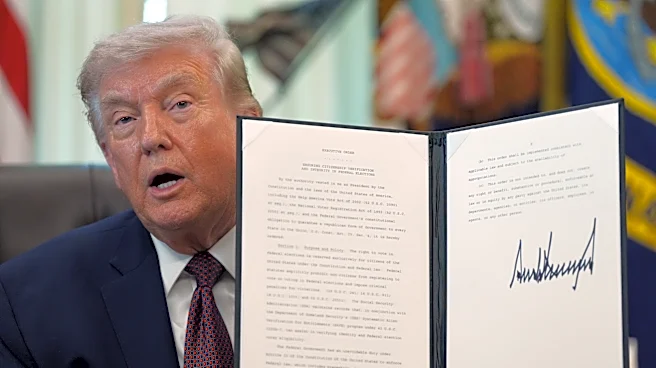
President Trump has signed an executive order aimed at creating a nationwide list of verified eligible voters and tightening mail-in voting regulations. The order directs the Department of Homeland Security to compile a list of eligible voters and mandates
that the U.S. Postal Service only send absentee ballots to those on the list. Critics argue that the order is unconstitutional and will face legal challenges, as previous executive orders by Trump on voting have been blocked by courts. The order also seeks to require mail-in ballots to have secure envelopes with unique barcodes for tracking. Election experts and voting rights advocates have expressed concerns over the legality of the order, citing the Constitution's provision that the 'Times, Places and Manner' of federal elections are determined by individual states.
Why It's Important?
The executive order represents a significant federal intervention in the administration of elections, traditionally a state responsibility. If implemented, it could alter the landscape of mail-in voting, potentially affecting millions of voters who rely on absentee ballots. The order has sparked a debate over federal versus state control of elections, with potential implications for voter access and election security. Legal challenges could delay or prevent the order's implementation, impacting upcoming elections. The move also highlights ongoing tensions between the Trump administration and states over election administration and voter data access.
What's Next?
Legal challenges are expected as voting rights advocates and Democratic state officials prepare to sue to block the order. The outcome of these lawsuits could determine the order's fate and set precedents for federal involvement in election administration. The Trump administration may continue to push for legislative changes to support the order's objectives, but opposition in Congress could stall such efforts. The Supreme Court's upcoming decisions on related election issues may also influence the order's implementation and broader election policies.