








What's Happening?
The United States has deployed anti-ship missile launchers to the Northern Philippines, specifically near the Luzon Strait, as part of the Balikatan 2026 military exercises. This deployment involves around 1,300 Marines and Sailors from the Hawaii-based
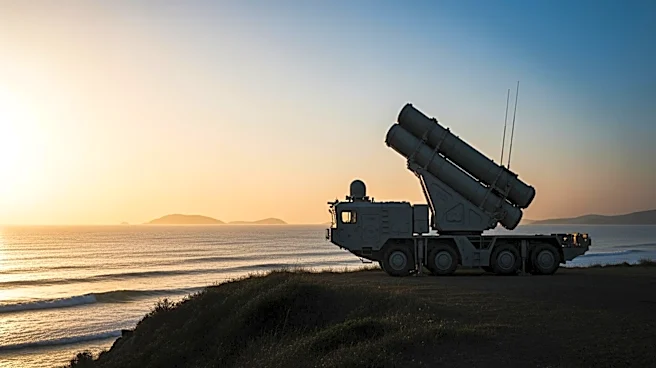
3rd Marine Littoral Regiment. The regiment is participating in maritime strike, coastal defense, and sea denial operations alongside Philippine forces. The deployment includes the Naval Strike Missile-equipped Navy-Marine Corps Expeditionary Ship Interdiction System (NMESIS), which has been stationed at Cagayan North International Airport. This location is one of nine sites available to U.S. forces under the Enhanced Defense Cooperation Agreement. The exercises are part of a broader U.S.-Philippine alliance focus on the Luzon Strait, a strategic area amid concerns over potential conflicts involving Taiwan.
Why It's Important?
The deployment of U.S. anti-ship missiles in the Philippines underscores the strategic importance of the Luzon Strait, a critical passage in the first island chain. This move is part of a pattern of increasingly sophisticated U.S. military deployments in Southeast Asia, reflecting heightened tensions in the South China Sea and concerns over China's regional influence. The exercises aim to enhance the U.S.-Philippine military alliance and demonstrate the U.S.'s commitment to regional security. The presence of advanced missile systems could deter potential aggression and reassure U.S. allies in the region. Additionally, the exercises highlight the strategic value of the Philippines as a partner in maintaining stability in the Indo-Pacific region.
What's Next?
The Balikatan 2026 exercises will continue with several coastal and maritime strike drills throughout Northern Luzon. These activities are expected to involve Japanese and Philippine anti-ship launchers, including Japan's Type 88 and the Philippine Marine Corps' BrahMos missiles. The exercises will likely lead to further military collaboration and joint training between the U.S. and its regional allies. The ongoing military presence and exercises may prompt reactions from China, which has previously expressed concerns over U.S. military activities in the region. The situation will require careful diplomatic management to avoid escalating tensions.