
What's Happening?
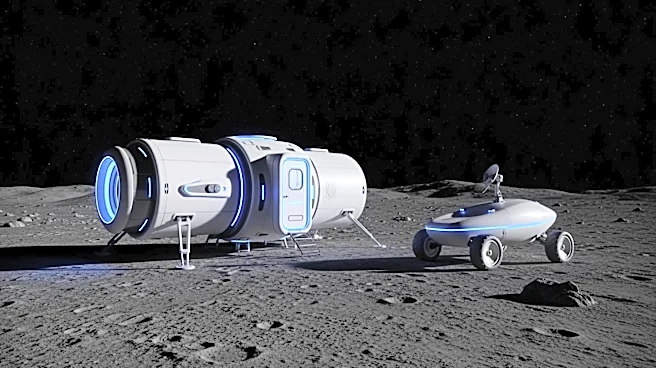
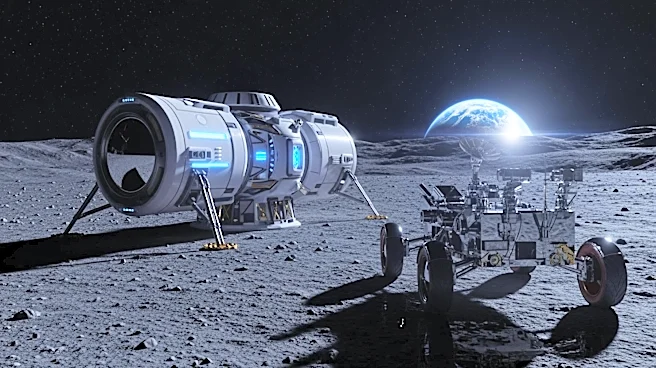
Lunar Outpost, a Colorado-based space company, is advancing lunar exploration with its new Pegasus rover. The company has secured $30 million in funding to develop this agile rover, which is designed for
versatile exploration and construction on the moon. The Pegasus rover is set to be delivered by 2027, aligning with NASA's Artemis 4 mission. This mission will mark the first time a robotic system, specifically Lunar Outpost's Mobile Autonomous Prospecting Platform (MAPP) rover, will work alongside an astronaut on the lunar surface. This collaboration aims to enhance the study of lunar regolith and support infrastructure development, paving the way for long-term lunar settlements.
Why It's Important?
The partnership between Lunar Outpost and NASA represents a significant milestone in human-robotic synergy, crucial for future lunar and deep-space exploration. By integrating autonomous machines with human crews, the mission aims to reduce astronaut workload and enable more complex operations on the lunar surface. This development is critical for establishing a sustainable human presence on the moon, which is seen as a launching point for further space exploration, including missions to Mars. The success of this mission could accelerate the timeline for making humans a multi-planetary species, highlighting the importance of commercial innovation in space exploration.
What's Next?
Lunar Outpost plans to continue developing its ecosystem of lunar infrastructure, including energy storage systems, habitats, and landing pads. The successful deployment and operation of the Pegasus rover will be a key step in this process. As the Artemis 4 mission approaches, further collaborations with NASA and other space agencies are likely to expand, potentially leading to more advanced missions and the establishment of permanent lunar bases. The outcomes of these missions will inform future strategies for extraterrestrial colonization and exploration.