



What's Happening?
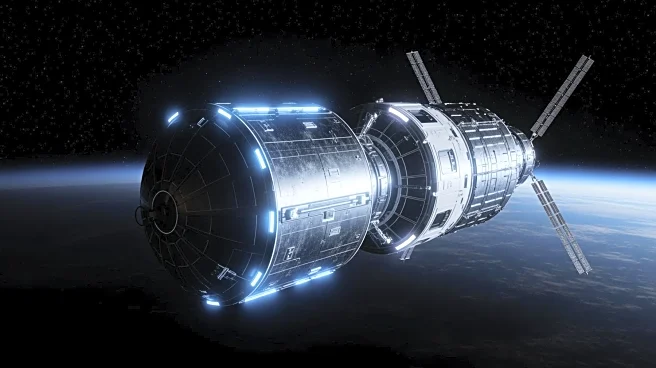
Russia has announced plans to recycle its segment of the International Space Station (ISS) to form the core of a new Russian Orbital Station (ROS). This decision comes as NASA prepares to deorbit the ISS after 2030. The Russian segment, controlled by
Roscosmos, has aged significantly, raising concerns about its viability for future use. The original plans for a new station, launched from the Vostochny Cosmodrome, have been scrapped due to economic constraints following Russia's invasion of Ukraine. The new station will maintain the same orbit as the ISS, likely continuing launches from Baikonur in Kazakhstan.
Why It's Important?
The decision to recycle the ISS segment reflects Russia's economic challenges and its need to maintain a presence in space. The move highlights the broader geopolitical and economic impacts of the Ukraine conflict on Russia's space ambitions. The continued use of the Baikonur launch site underscores the complexities of international space collaboration and the challenges of reducing foreign dependencies. The development of the ROS will be closely watched by the global space community, as it could influence future international partnerships and the strategic balance in space exploration.
What's Next?
Russia will need to address the technical and logistical challenges of repurposing the ISS segment for the ROS. The international space community will be monitoring the project's progress, as it could impact future collaborations and the dynamics of space exploration. The situation may also prompt other countries to reassess their space strategies and partnerships. The success or failure of the ROS could have long-term implications for Russia's role in the global space industry.