






What's Happening?
A Chinese national, Tianrui Liang, was arrested at New York's John F. Kennedy International Airport for allegedly photographing sensitive military aircraft near Offutt Air Force Base in Nebraska. Liang, 21, is accused of violating a federal law that prohibits
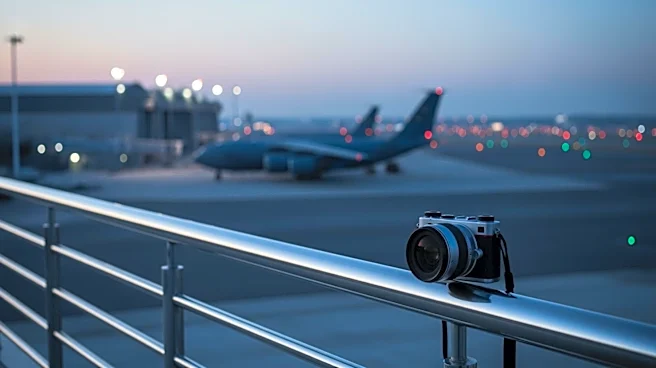
photographing defense installations without authorization. According to court documents, he was taken into custody on April 7 while attempting to board an international flight, following a warrant issued in Nebraska. The case involves activity near Offutt Air Force Base, home to the US Strategic Command, one of the Pentagon's most sensitive installations. An FBI affidavit revealed that a witness reported seeing Liang with a camera equipped with a telescopic lens near the base. Investigators found numerous photographs of military aircraft on his camera, including images of the RC-135 and E-4B planes. Liang, a student at Glasgow University in Scotland, had traveled through Canada before entering the United States.
Why It's Important?
This incident underscores the ongoing concerns about national security and the protection of sensitive military installations in the United States. The arrest of Tianrui Liang highlights the potential risks posed by unauthorized photography of military assets, which could lead to the exposure of critical defense information. The case also reflects broader geopolitical tensions, particularly involving foreign nationals and sensitive U.S. military sites. The arrest may prompt increased scrutiny and security measures at military bases and airports to prevent similar incidents. It also raises questions about the effectiveness of current laws and enforcement mechanisms in safeguarding national security interests.
What's Next?
The legal proceedings against Tianrui Liang will likely continue, with potential charges related to unauthorized photography of military installations. The case may lead to a review of security protocols at U.S. military bases, particularly those housing sensitive assets. Authorities might implement stricter measures to monitor and control access to areas near military installations. Additionally, the incident could influence diplomatic relations, particularly if it is perceived as part of a broader pattern of foreign nationals engaging in activities that threaten U.S. security. The outcome of this case could set a precedent for how similar incidents are handled in the future.