




What's Happening?
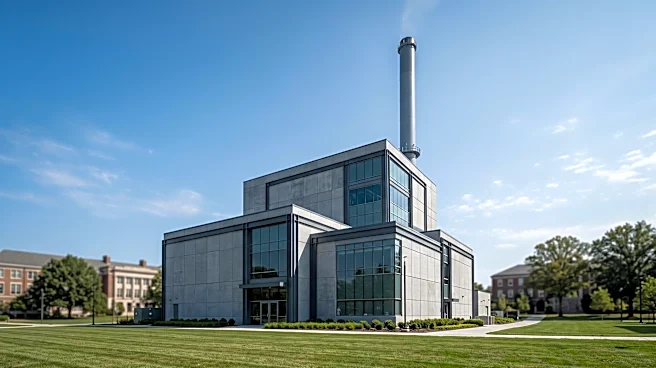
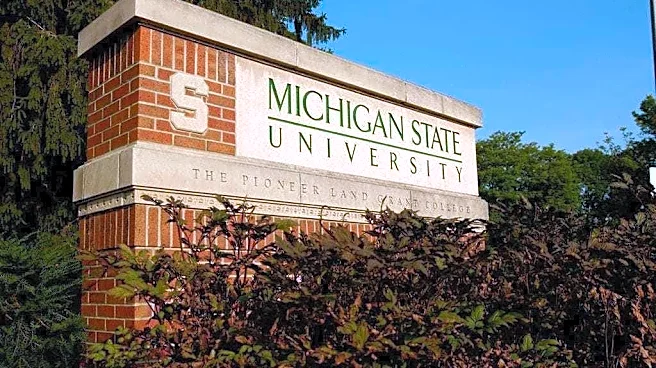
Michigan State University (MSU) is experiencing ongoing hot water and heating problems across its East Lansing campus following a power plant failure that occurred on Saturday. The outage, which began around 4:15 p.m., led to widespread disruptions including
internet and cellular service, hot water, and heat. While electricity was largely restored by early Sunday morning, the equipment connecting to the external electrical grid was damaged, causing persistent utility issues. As a result, the university moved to online classes and remote work on Monday, with decisions on in-person instruction for Tuesday being made on a case-by-case basis. The college president has apologized for the inconveniences, particularly to on-campus students, and stated that plans are underway to provide access to hot showers, though restoration timelines vary by residence hall. Inspection, restoration, and repairs are being conducted on a building-by-building basis.
Why It's Important?
The utility disruptions at Michigan State University highlight the critical reliance of large institutions on robust infrastructure and the significant impact that failures can have on daily operations and student life. For MSU, a major public university, the inability to provide basic amenities like hot water and heat affects thousands of students residing on campus, potentially impacting their well-being and academic performance. The shift to remote learning, even temporarily, disrupts educational continuity and requires rapid adaptation from both faculty and students. Economically, such outages can lead to unforeseen costs for repairs, potential loss of productivity, and reputational damage for the university. It also underscores the vulnerability of complex systems to single points of failure, prompting questions about redundancy and emergency preparedness in large campus environments. The situation also affects local businesses that rely on the university's normal operations and student presence.
What's Next?
Michigan State University will continue its building-by-building inspection, restoration, and repair efforts to fully resolve the hot water and heating issues. Students and faculty are advised to monitor updates from their academic departments regarding class schedules, as some classes may transition back to in-person instruction while others remain remote. The university is actively working on providing alternative solutions, such as access to hot showers, for students in affected residence halls, with varying timelines for full restoration. In the longer term, MSU may review its infrastructure and emergency response protocols to prevent similar widespread disruptions in the future. This could involve investments in backup power systems or alternative utility sources to enhance campus resilience.
Beyond the Headlines
This incident at Michigan State University extends beyond immediate utility concerns, touching upon broader issues of infrastructure resilience and the student experience in modern higher education. The reliance on a single power plant for essential services exposes a vulnerability that many large institutions might share. The disruption to internet and cellular services, alongside basic utilities, underscores how interconnected modern campus life is and how a single failure can cascade into multiple areas. Ethically, the university faces the challenge of ensuring student welfare during such crises, particularly for those living on campus who depend entirely on university facilities. This event could prompt a re-evaluation of infrastructure investment priorities, emphasizing not just expansion but also redundancy and modernization to safeguard against future disruptions and ensure a consistent, high-quality living and learning environment for students.