

What's Happening?
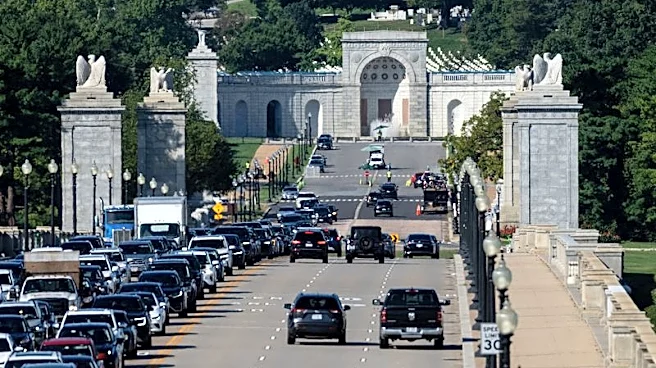
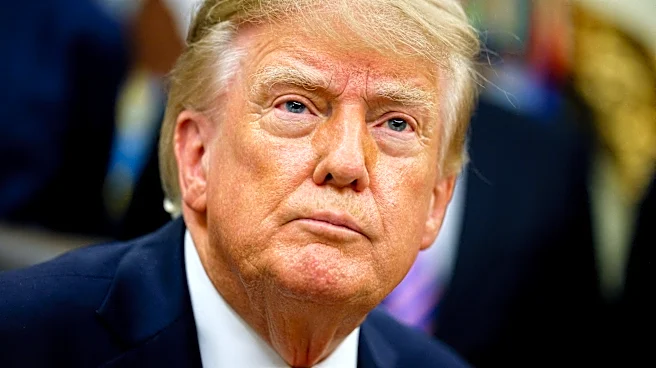
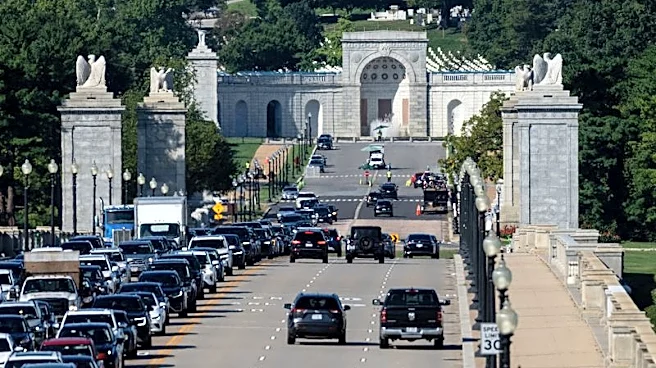
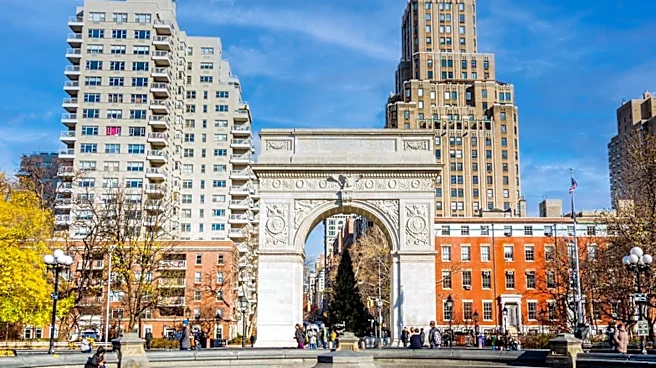
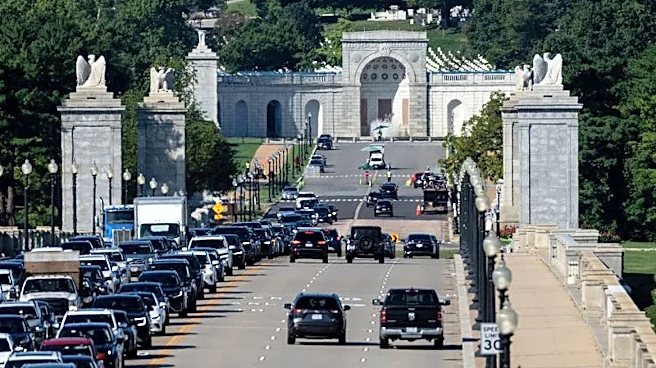
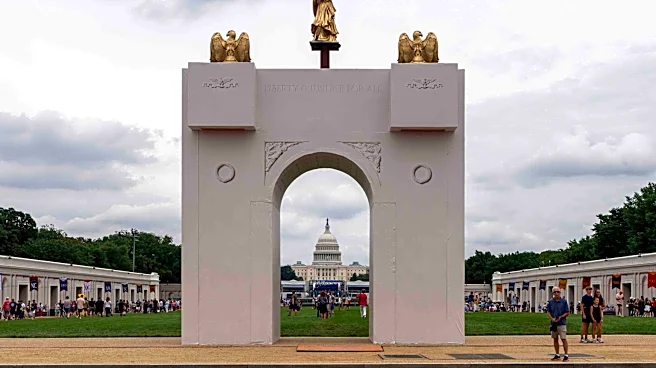
President Trump is invoking national security as a justification for his plans to construct a triumphal arch in Washington, D.C. This claim, shared on his social media platform, suggests the arch would serve as a 'top grade Military Complex/Triumphal
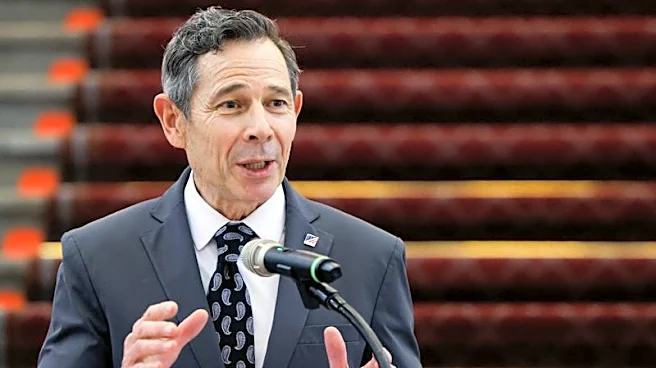
Arch,' housing drones and ammunition, and providing space for snipers. This rationale is part of a recurring pattern where President Trump has cited national security to defend various initiatives, including immigration restrictions, tariffs, and a new White House ballroom. Legal experts, however, are questioning the sincerity of this justification. Harold Hongju Koh, an international law professor at Yale Law School, described the national security argument as a 'litigation ploy' and 'laughable,' suggesting it is a pretext. Ashley Deeks, vice dean at the University of Virginia School of Law and a former White House associate counsel, expressed surprise at the military uses now being attributed to the arch, implying the national security angle might be strategic rather than factual. The arch proposal has faced legal challenges, with a group of Vietnam War veterans contesting the plans in court.
Why It's Important?
The repeated use of national security as a justification for domestic projects, particularly those involving significant public land and historical landmarks, raises important questions about executive power and the checks and balances within the U.S. government. While courts typically grant deference to the executive branch on national security matters, legal scholars like Thomas Lee of Fordham School of Law note that this deference is not absolute. The skepticism from legal experts regarding the arch's national security claims suggests a potential overreach or misuse of this powerful justification. If such arguments are consistently accepted without rigorous scrutiny, it could set a precedent for future administrations to bypass traditional regulatory and legislative processes for projects by simply labeling them as national security imperatives. This could undermine public trust in government decision-making and erode the established procedures for public works and historical preservation. The ongoing litigation highlights the tension between presidential authority and public interest groups, with implications for how future large-scale projects are proposed and implemented in the nation's capital.
What's Next?
The legal challenge against the proposed triumphal arch is expected to continue, with the Justice Department yet to formally present a national security rationale in court. Judge Tanya Chutkan of the U.S. District Court for the District of Columbia will ultimately decide how much deference to grant the government's claims. The outcome of this case could be influenced by a recent high court order that made it more difficult for challengers to sue over President Trump's alterations to historic buildings. Nicolas Sansone of Public Citizen Litigation Group, representing the veterans, views the national security justification as 'completely manufactured' and believes it does not address the fundamental illegality of the project. The legal proceedings will likely focus on whether the proposed military uses for the arch are genuine or merely a tactic to circumvent legal obstacles. The broader implications for future projects involving national security claims will also be closely watched, as the court's decision could establish important precedents for executive authority and judicial review.
Beyond the Headlines
The controversy surrounding President Trump's proposed triumphal arch and his use of national security as a justification extends beyond the immediate legal battle. It touches upon the broader cultural and historical significance of Washington D.C.'s landscape and the processes by which such landmarks are established or altered. The idea of converting a commemorative arch into a 'Military Complex' with drones and sniper nests fundamentally redefines the purpose and symbolism of public monuments. This approach could be seen as a militarization of public spaces, potentially altering the perception of the capital as a center of democracy and culture. Furthermore, the repeated invocation of national security for projects like a ballroom or an arch raises ethical questions about transparency and accountability in government. It suggests a potential erosion of the distinction between genuine national security threats and political or personal agendas, which could have long-term consequences for public discourse and trust in governmental institutions. The debate also highlights the ongoing struggle between presidential prerogative and the preservation of historical and architectural integrity.