






What's Happening?
State officials in South Dakota have clarified that unusually high air quality readings reported in Rapid City over a recent weekend were incorrect and did not reflect actual conditions. The South Dakota Department of Agriculture and Natural Resources
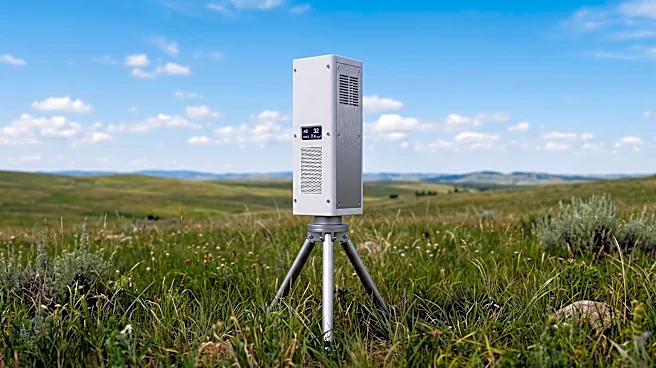
stated that a time synchronization error at an air quality monitoring station in Rapid City caused inaccurate readings on a public air quality map. This error led to artificially elevated measurements of fine particulate matter, known as PM 2.5, which can impact air quality reports. Officials emphasized that there was no actual threat to public health and no indication that Rapid City experienced unhealthy air quality during the period in question. The issue was limited to the monitoring equipment, and the public should not be concerned about any air quality impacts from the erroneous readings.
Why It's Important?
The clarification from state officials is important for maintaining public trust and preventing unnecessary alarm regarding environmental health. Inaccurate air quality reports can lead to public anxiety, affect outdoor activities, and potentially influence local business operations if residents believe the air is unsafe. By promptly identifying and correcting the error, the South Dakota Department of Agriculture and Natural Resources demonstrated transparency and a commitment to providing accurate information. This incident highlights the critical role of reliable monitoring systems and the need for robust protocols to ensure data integrity, especially concerning public health and environmental safety. It also underscores the importance of official communication channels in dispelling misinformation and reassuring the public.
What's Next?
Following this incident, the South Dakota Department of Agriculture and Natural Resources will likely review and potentially enhance its protocols for air quality monitoring station maintenance and data synchronization to prevent similar errors in the future. Public communication efforts may also be reinforced to ensure that residents receive timely and accurate information regarding environmental conditions. The department will continue to monitor air quality across the state, providing updates as necessary. This event serves as a reminder for both state agencies and the public to verify information from official sources, especially when it pertains to health and safety, and to understand the mechanisms behind environmental data collection.
Beyond the Headlines
This incident in Rapid City, while seemingly a technical glitch, points to broader implications concerning data reliability and public perception of environmental health. In an era where environmental concerns are increasingly prominent, the accuracy of monitoring data is paramount. Errors, even if quickly corrected, can erode public confidence in scientific measurements and government agencies. It also highlights the complexity of environmental monitoring systems and the potential for technical malfunctions to have significant, albeit temporary, impacts on public perception. The event underscores the need for continuous investment in robust infrastructure and skilled personnel to manage and interpret environmental data effectively, ensuring that public health decisions are based on sound information.