





What's Happening?
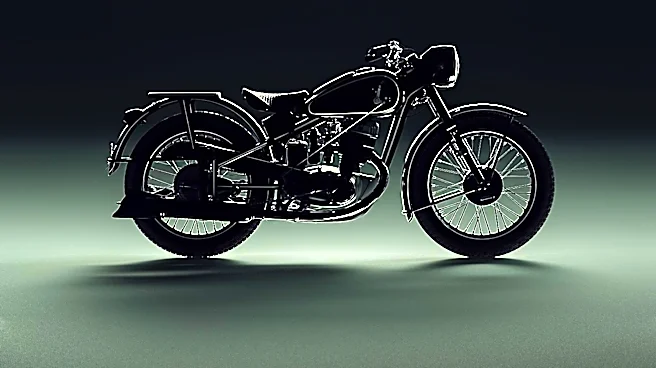
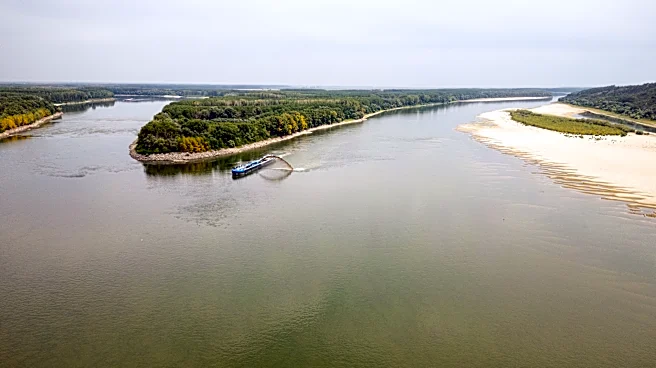
Record low water levels in the Danube River in Budapest have uncovered a near-intact Wehrmacht motorbike from World War II. The DKW NZ 350-1 model, found near the Hungarian parliament building, is considered a significant historical find by the local
Institute and Museum of Military History. The motorbike, preserved in the river's mud, was developed for wartime use and produced from 1944. This discovery is part of a broader uncovering of wartime artifacts, including anti-tank mines and artillery shells, suggesting the area may have been used as a 'war rubble dump' during the war. The Battle of Budapest, a significant WWII conflict, took place in this region, resulting in heavy casualties among German, Hungarian, Soviet, and Romanian forces.
Why It's Important?
The discovery of the Wehrmacht motorbike offers valuable insights into the historical events of World War II, particularly the Battle of Budapest. Such finds contribute to the understanding of military history and the impact of the war on Hungary. For historians and military enthusiasts, the motorbike and other artifacts provide tangible connections to the past, enhancing the narrative of wartime activities in the region. Additionally, these discoveries may attract interest from tourists and researchers, potentially boosting local cultural and historical tourism. The preservation of such artifacts is crucial for educational purposes and for honoring the memory of those affected by the war.