





What's Happening?
The Kalamazoo City Commission has postponed a vote on an amendment to its purchasing policy that would require commission approval for contracts involving police surveillance technology. Initially, the proposed amendment focused specifically on Automated
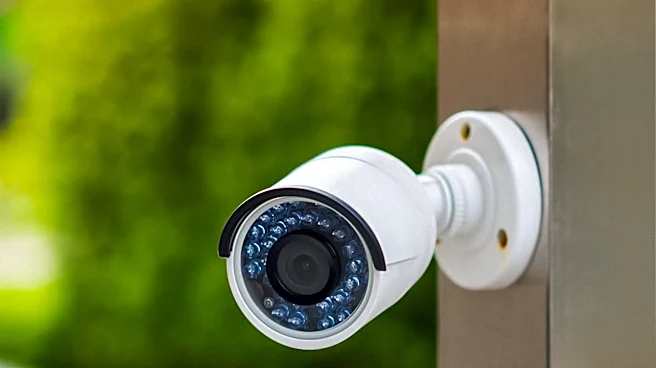
License Plate Reader (ALPR) technology, mandating commission approval regardless of the contract's dollar amount. However, during the September 8 meeting, commissioners expressed a desire for broader oversight. Vice Mayor Drew Duncan advocated for the policy to cover all law enforcement surveillance technology, including renewals, extensions, and successor vendors, not just new ALPR contracts. Commissioner Chris Praedel highlighted other surveillance tools like video cameras, drones, and gunshot-detection systems, suggesting a more comprehensive term like 'law enforcement surveillance technology.' Commissioner Jae Slaby also raised concerns about potential misuse by city employees outside of law enforcement. The commission ultimately voted 6-1 to postpone the decision until its September 21 meeting, allowing City Attorney Aaron Leal time to draft more expansive language.
Why It's Important?
This delay signifies a growing recognition among local policymakers of the need for more robust oversight of surveillance technologies. The debate in Kalamazoo reflects a national conversation about privacy, civil liberties, and the appropriate use of advanced surveillance tools by law enforcement. By seeking to broaden the policy beyond ALPRs, the commission is acknowledging the rapid evolution of surveillance capabilities and attempting to create a framework that can adapt to future technological advancements. This move could set a precedent for other municipalities grappling with similar issues, potentially leading to increased transparency and accountability in how cities acquire and deploy surveillance systems. The discussion also highlights concerns about potential misuse of such technologies by various city personnel, underscoring the complexity of implementing effective oversight mechanisms.
What's Next?
The Kalamazoo City Commission is scheduled to revisit the proposed amendment at its September 21 meeting. City Attorney Aaron Leal will present revised language that aims to encompass a broader range of law enforcement surveillance technologies and address concerns about contract renewals and potential misuse by non-law enforcement city staff. The outcome of this vote will determine the extent of the commission's direct involvement in approving future surveillance technology contracts. Depending on the adopted language, it could lead to more public debate and scrutiny over the acquisition of such tools, potentially influencing how the Kalamazoo Police Department and other city departments utilize surveillance in the future. The decision will also indicate the commission's stance on balancing public safety needs with privacy concerns.
Beyond the Headlines
The Kalamazoo commission's deliberation points to a deeper societal challenge: how to govern rapidly advancing surveillance technologies in a democratic society. The initial focus on ALPRs, driven by public concerns over companies like Flock Safety, has evolved into a broader discussion about the entire ecosystem of surveillance. This expansion reflects an understanding that piecemeal regulations may be insufficient to address the comprehensive impact of interconnected surveillance systems. The debate also touches on the ethical implications of data collection and retention, the potential for mission creep, and the erosion of privacy in public spaces. The commission's eventual decision will not only shape local policy but could also contribute to the ongoing national dialogue about the balance between security, privacy, and civil liberties in the digital age.