
What's Happening?
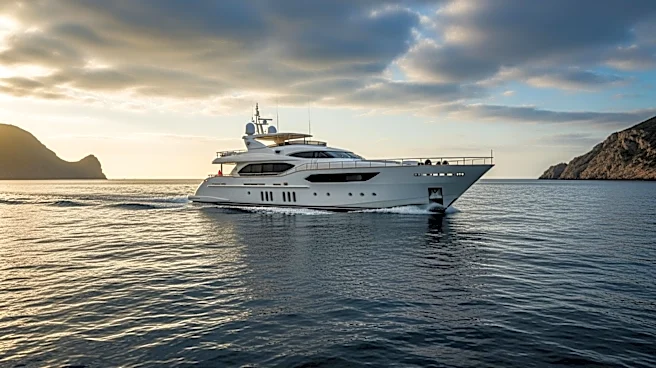
Russian billionaire Alexey Mordashov's superyacht, Nord, has successfully navigated through the Strait of Hormuz despite ongoing maritime restrictions. The yacht, which departed from Dubai, crossed the strait
en route to Oman. This passage occurred amidst heightened tensions following the outbreak of conflict involving the U.S. and Israel against Iran. The strait, a critical oil transit route, has been under Iranian control with limited access due to the conflict. Iran has reportedly allowed Russian-linked vessels to pass without standard transit fees, despite broader restrictions. Mordashov, the owner of the steel company Severstal, is under sanctions from the U.S., U.K., and EU. The yacht's passage highlights the strategic exemptions granted by Iran to Russian vessels, reflecting the complex geopolitical dynamics in the region.
Why It's Important?
The passage of Mordashov's yacht through the Strait of Hormuz underscores the geopolitical complexities in the region, particularly the strategic alliances between Russia and Iran. The strait is a vital corridor for global oil and liquefied natural gas shipments, and any disruption can significantly impact global energy markets. The exemptions granted to Russian vessels suggest a deepening of ties between Russia and Iran, potentially altering regional power balances. This development could prompt responses from other global powers, particularly those reliant on the strait for energy supplies. The situation also highlights the challenges of enforcing international sanctions and the potential for sanctioned individuals to circumvent restrictions through strategic alliances.
What's Next?
The ongoing conflict and maritime restrictions in the Strait of Hormuz are likely to continue influencing global energy markets and geopolitical relations. Stakeholders, including the U.S. and its allies, may need to reassess their strategies in the region to address the implications of Iran's selective exemptions. Additionally, the situation could lead to increased diplomatic efforts to stabilize the region and ensure the free flow of energy resources. Monitoring the movements of sanctioned individuals and their assets will remain a priority for international regulators to enforce compliance with sanctions.