
What's Happening?
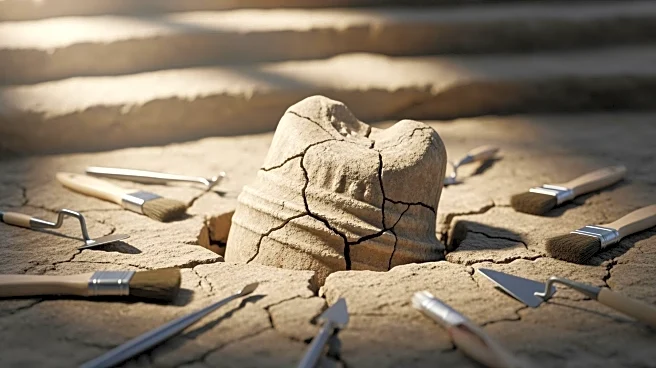
Alexander Butyagin, a Russian archaeologist, is currently detained in Poland and faces potential extradition to Ukraine. Butyagin, who has been leading archaeological expeditions in Crimea since 1999, is accused by Ukrainian authorities of conducting
illegal excavations and partially destroying an archaeological complex without authorization. His work continued after Russia's annexation of Crimea in 2014, which Ukraine and much of the international community consider illegal. The Ukrainian government has opened a criminal case against him, and a Kyiv court ordered his arrest in absentia in April 2025. Butyagin's supporters argue that his work has preserved Crimea's ancient heritage, while critics claim he is exploiting the region's history under the guise of Russian occupation. The case has sparked debate over the role of museums and experts in geopolitical conflicts, with the Hermitage Museum in Russia defending Butyagin's actions as compliant with international norms.
Why It's Important?
The case highlights the complex intersection of archaeology, international law, and geopolitics. It raises questions about the protection of cultural heritage in conflict zones and the responsibilities of archaeologists working under occupation. The situation underscores the challenges faced by international legal frameworks, such as the Hague Convention, in enforcing cultural property protection during armed conflicts. The outcome of Butyagin's case could set a precedent for how similar cases are handled in the future, potentially affecting international relations and the enforcement of cultural heritage laws. It also reflects broader tensions between Russia and Ukraine, with implications for European legal systems and their handling of extradition requests involving politically sensitive cases.
What's Next?
The Polish court's decision on whether to extradite Butyagin to Ukraine is pending. If extradited, it could lead to a trial in Ukraine, further straining relations between Russia and Ukraine. The case may also influence future extradition decisions by European courts, particularly concerning individuals involved in politically charged situations. Observers are watching to see how the European Convention on Human Rights will be applied, especially regarding concerns about politically motivated persecution and fair trial rights. The international archaeological community may also respond, potentially revisiting ethical guidelines for conducting research in occupied territories.
Beyond the Headlines
The case raises ethical questions about the role of archaeologists in conflict zones and the potential for their work to be used as propaganda tools. It also highlights the difficulties in preserving cultural heritage amid geopolitical disputes, where legal and ethical standards may conflict. The situation in Crimea serves as a reminder of the broader cultural and historical stakes involved in territorial conflicts, where the control of historical narratives can be as contentious as the physical territory itself.