




What's Happening?
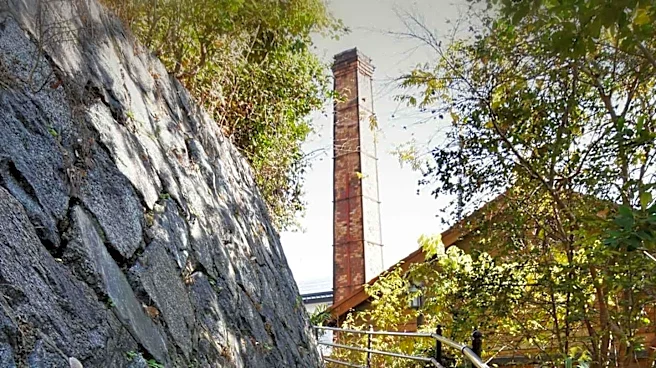
In south Charlotte, an abandoned Charlotte-Mecklenburg Schools building has become the focal point of a dispute between nature conservationists, local parents, and city officials. Avian activists are advocating for the preservation of a specific chimney
on the property, which serves as a crucial roosting site for migrating chimney swifts. Conservationist Alden Picard described the nightly roosting as a "swiftnado," a swirling cloud of birds. The North Carolina Wildlife Federation, Mecklenburg Audubon, and Charlotte Wildlife Stewards have gathered to observe this phenomenon. However, local parents have voiced concerns about the abandoned building and the presence of squatters, citing safety risks to the nearby Collinswood Language Academy. The county's office of asset and facility management has stated they are working to save the chimney, but without guarantees, as the rest of the building is slated for demolition.
Why It's Important?
This situation highlights the increasing challenges faced by migrating bird populations due to habitat loss and urban development. Chimney swifts, whose population has declined significantly, rely on structures like this abandoned chimney for roosting as natural hollow trees become scarce. The conflict underscores the tension between urban expansion, public safety, and environmental conservation efforts. Preserving such structures is vital for biodiversity, especially for species that have adapted to human-made environments. The debate also brings to light the broader issue of how cities balance development with ecological responsibility, and the role of community activism in advocating for environmental causes. The outcome of this battle could influence future urban planning decisions and conservation strategies in Charlotte and similar metropolitan areas.
What's Next?
The county's office of asset and facility management is attempting to preserve the chimney during the demolition of the rest of the abandoned school building. However, the success of this effort is uncertain until the contractor begins work on-site. Activists will likely continue to monitor the situation closely and advocate for the chimney's protection. The ongoing concerns from local parents about safety and squatters will also need to be addressed, potentially influencing the timeline and methods of demolition. This case could lead to increased awareness and potentially new initiatives for identifying and protecting critical bird habitats within urban settings. It may also prompt discussions on how to integrate ecological considerations more effectively into urban development and demolition projects.
Beyond the Headlines
The struggle to save the chimney for chimney swifts reflects a broader ecological crisis: the decline of insect populations and suitable habitats for many bird species. The "insect apocalypse" mentioned by Sarah Gagné, chair of UNC Charlotte’s Department of Earth, Environmental and Geographical Sciences, directly impacts birds like swifts that rely on insects for food. This incident serves as a microcosm of the larger environmental challenges posed by human activity and climate change. It also highlights the adaptability of wildlife, as swifts moved from hollow trees to chimneys, and the subsequent threat when even these adapted habitats are lost. The story underscores the interconnectedness of ecosystems and the long-term consequences of habitat destruction, prompting a reevaluation of how urban environments can coexist with and support local wildlife.