








What's Happening?
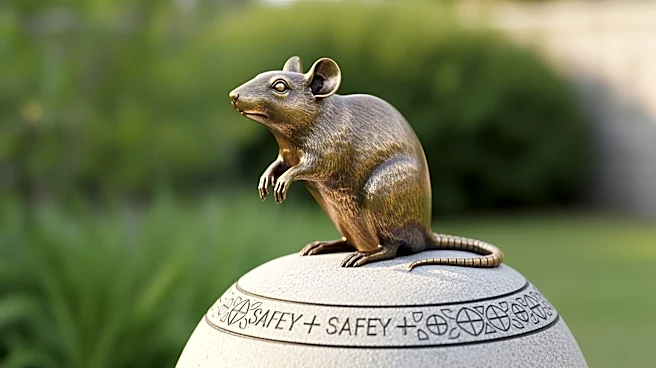
A seven-foot tall statue has been unveiled in Cambodia to honor Magawa, an African giant pouched rat, for his significant contributions to landmine detection. Magawa was part of Apopo, a Belgian non-profit organization that trains animals to locate landmines.
Over his five-year career, Magawa successfully sniffed out more than 100 landmines, helping to clear approximately 1.5 million square feet of land. His efforts have been crucial in a country still grappling with the remnants of wars from the 1970s and 1980s, which left millions of landmines buried. Magawa retired in 2021 and passed away the following year, but his legacy continues as he helped train younger rats in detection skills.
Why It's Important?
The work of Magawa and Apopo highlights an innovative approach to addressing the persistent issue of landmines in Cambodia, which have caused over 18,000 deaths and 45,000 injuries since 1979. The use of rats, which are lightweight and possess a keen sense of smell, offers a safe and effective method for landmine detection. This initiative not only saves lives but also aids in the rehabilitation of land for agricultural and developmental use, contributing to the economic recovery and safety of affected communities. The statue serves as a symbol of the successful partnership between humans and animals in tackling humanitarian challenges.
What's Next?
Apopo continues its mission to train more rats for landmine detection, with over six million landmines still estimated to be buried in Cambodia. The organization aims to expand its operations and enhance its training programs to increase the number of trained rats. This ongoing effort is crucial for the continued safety and development of landmine-affected areas. The success of Magawa and his peers may inspire similar initiatives in other regions facing similar challenges, potentially leading to broader adoption of animal-assisted demining techniques.
Beyond the Headlines
The story of Magawa underscores the potential for unconventional solutions in addressing global humanitarian issues. It raises awareness about the long-term impacts of war and the importance of innovative approaches in post-conflict recovery. The ethical dimension of using animals in such roles is also noteworthy, as it highlights the need for humane treatment and recognition of their contributions. This development may prompt further discussions on the role of animals in humanitarian efforts and the ethical considerations involved.