







What's Happening?
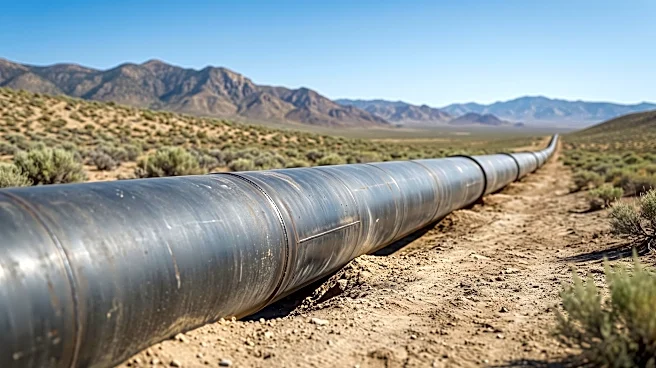
The Federal Energy Regulatory Commission (FERC) is currently reviewing a proposed expansion of the Great Basin Gas Transmission Company's pipeline system in northern Nevada. This expansion, spanning approximately 230 miles of new or expanded pipeline across
several counties, aims to meet the increasing natural gas demand driven by a surge in artificial intelligence and data center growth in the region. According to pre-filings with FERC, the project includes plans for 12 new delivery points, one of which is a proposed 510-megawatt natural gas-fired power plant by Switch, a major data center developer. Nevada Governor Joe Lombardo has expressed support for the pipeline expansion, citing its potential to foster future economic development, particularly for data centers. NV Energy projects that electricity demand in Nevada could double by 2030 due due to this growth. The Great Basin Gas Transmission Company expects the expansion to be operational by November 2028, pending formal FERC approval.
Why It's Important?
This FERC review is critical for the energy landscape and economic development in Nevada. The approval of the gas pipeline expansion and the associated power plants directly addresses the escalating energy demands of the rapidly expanding data center industry, which is a significant economic driver for the state. However, it also raises substantial environmental concerns. The proposed Switch gas-fired power plant alone could produce up to 2 million metric tons of carbon dioxide annually, potentially negating progress made in reducing electric sector emissions in Nevada since 2015. This development highlights a tension between economic growth and environmental sustainability, as private on-site power plants like Switch's are not subject to the state's renewable energy standard, which mandates 50% renewable energy by 2030 for traditional providers. The outcome of FERC's review will influence future energy infrastructure development and environmental policy in the region.
What's Next?
The Great Basin Gas Transmission Company's pipeline expansion project requires formal FERC approval before construction can commence, with an anticipated service entry in November 2028. Concurrently, if approved by state utility regulators, the Switch gas-fired power plant will need to secure additional state permits, including an air quality permit from the Nevada Division of Environmental Protection. The ongoing federal environmental review for the pipeline expansion will assess its potential impacts. Stakeholders, including environmental groups like Nevadans for Clean Affordable Reliable Energy, are likely to continue advocating for their positions during these regulatory processes. The decisions made by FERC and state regulators will set precedents for how Nevada balances its economic development goals, particularly in the tech sector, with its environmental commitments and energy policy objectives.
Beyond the Headlines
The situation in Nevada underscores a broader national challenge: how to power the rapidly expanding digital economy, particularly the energy-intensive data center and artificial intelligence sectors, while simultaneously addressing climate change goals. The reliance on natural gas for these new power plants, despite Nevada's renewable energy standards, highlights a potential loophole or a strategic compromise in energy policy. This could lead to increased scrutiny of private power generation projects and their environmental accountability. Furthermore, the undisclosed nature of some agreements for natural gas delivery to FERC raises questions about transparency in energy infrastructure planning and the influence of large tech companies on regional energy policy. The long-term implications could include a re-evaluation of regulatory frameworks to ensure that all energy producers contribute to environmental targets and that the public has greater insight into energy supply agreements.